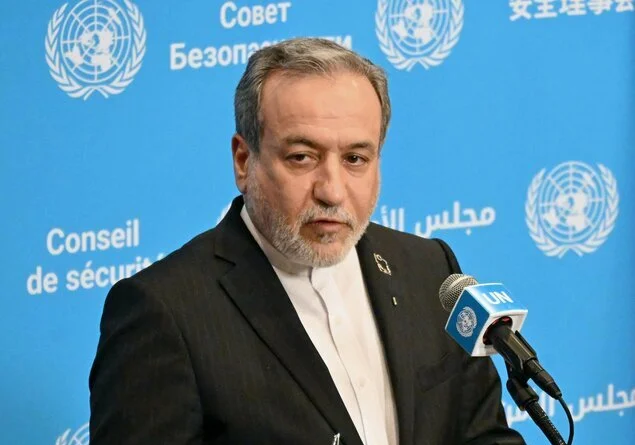
Araghchi says US attacks on Iran violate international law and UN Charter
Iran's Foreign Minister Seyyed Abbas Araghchi argued that US and Israeli strikes on Iran breach the UN Charter's ban on the use of force and Iran's sovereignty, in remarks published via Kyodo News and carried by Mehr News.
Published on 14 November 2026
SaveAraghchi says US attacks on Iran violate international law and UN Charter
Iran's Foreign Minister Seyyed Abbas Araghchi has argued that the US and Israeli military attacks on Iran violate the prohibition on the use of force and infringe Iran's sovereignty, and that their legality must be judged against the UN Charter and established principles of international law rather than political arguments raised after operations began. His remarks were published by Kyodo News Agency and carried by Mehr News.
Araghchi framed the dispute as one that goes beyond the political quarrel between Iran and the United States, saying it concerns a founding principle of the post-Second World War order: that the use of force is governed by law and that no state, however powerful, may place its own judgment above binding rules. The article cites Article 2(4) of the UN Charter, which prohibits the threat or use of force against the territorial integrity or political independence of any state, noting that the International Court of Justice confirmed this rule as customary international law in its 1986 judgment in the Nicaragua case. It states that force is permitted only in narrowly defined circumstances, including self-defense under Article 51, and that the US attack had no Security Council authorization and that allegations of possible future threats cannot by themselves provide a legal basis for invoking self-defense. Treating a potential future threat as grounds for military action, it argues, would amount to accepting preventive war based on the unilateral judgment of individual states.
The article says the legality of the US attack has also been challenged within the American legal community, citing a statement issued on March 6, 2026, by the president of the American Branch of the International Law Association describing the attack on Iran as unlawful and stressing that speculative threats cannot justify the use of military force. It adds that attacks on schools, sports stadiums, civilian infrastructure and Iranian nuclear facilities subject to International Atomic Energy Agency safeguards raise further questions under international humanitarian law, which requires parties to distinguish between military targets and civilians, refrain from disproportionate attacks and take feasible precautions to minimize harm to civilians and civilian infrastructure.
On state responsibility, the article cites UN General Assembly Resolution 3314, which defines aggression to include attacks by one state's armed forces against another state's territory and the blockade of a state's ports or coasts. Absent a valid legal justification, it says, the US attack constitutes an internationally wrongful act for which the United States bears responsibility, requiring it to cease the conduct if continuing, offer assurances and guarantees of non-repetition, and make full reparation. It adds that serious breaches of peremptory norms carry implications for other states, which must cooperate through lawful means to end such breaches, refrain from recognizing situations created by them as lawful, and withhold aid or assistance that would help maintain them. Iran, it says, retains the right of self-defense under Article 51, subject to the conditions and limitations imposed by international law.
Araghchi concluded that the significance of the case extends beyond Iran's security or the Middle East balance of power, arguing that what is at stake is the credibility of an international legal order meant to prevent states from resorting to force at will. He said the prohibition on the use of force is a binding obligation applying equally to all states, and that ending the US attacks, respecting Iran's sovereignty and territorial integrity, and providing reparation are legal obligations rather than political goodwill. According to Mehr News, he warned that if power is permitted to prevail over law, Iran will not be the only casualty and the foundations of the international legal order and the authority of the UN Charter will also be at risk.
Source: Mehr News — Read original story