IRGC spokesman warns of global energy crisis if US resumes war on Iran
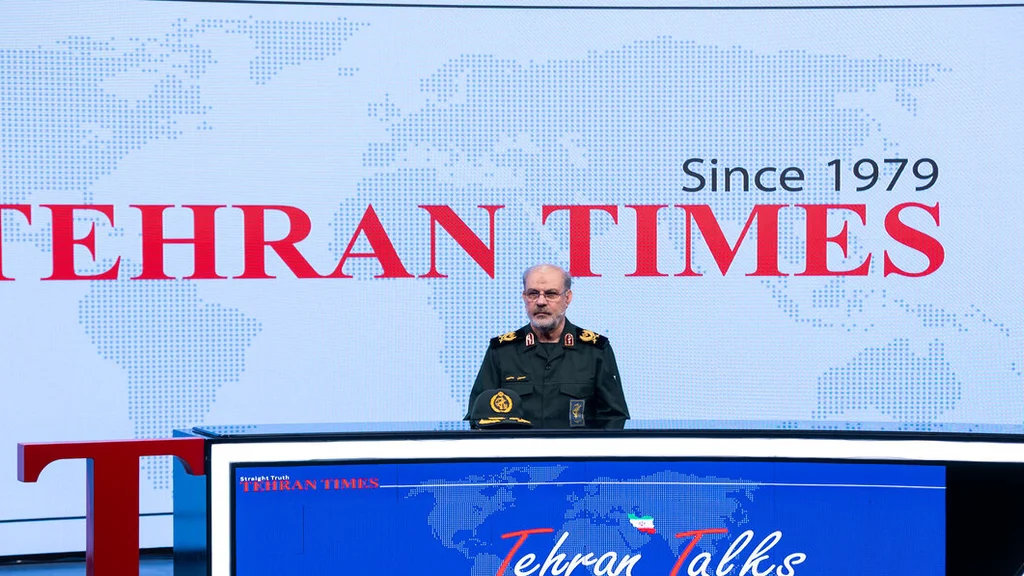
IRGC spokesman Brig. Gen. Hossein Mohebbi said in an interview that any new US military action, even limited, would trigger a serious energy crisis and that Iran has not yet fully closed the Strait of Hormuz.
Published on 19 October 2026
SaveIRGC spokesman warns of global energy crisis if US resumes war on Iran
Brigadier General Hossein Mohebbi, spokesman for Iran's Islamic Revolutionary Guard Corps (IRGC), said in an exclusive interview with the Tehran Times that while the United States is not currently capable of launching an effective new conflict, a limited US action—particularly one timed around American elections—cannot be ruled out. He warned that any new US move, even a limited one, would confront the world with a serious energy crisis, especially as Europe enters the cold season and many countries require energy for heating and daily life. Mohebbi added that global public opinion would mobilize against the US, which he said creates problems for the world by starting fires.
Mohebbi assessed that US military capability has weakened significantly. He said that before the war there were at least 30 to 40 warships inside the Persian Gulf, but today no US ships remain there and forces have withdrawn roughly 700 kilometers from the Strait of Hormuz. He claimed that most regional US bases have been shut down, their equipment destroyed, and that countries formerly cooperative with Washington no longer offer the same support. He also said US forces at distant bases such as Al-Azraq and Al-Tanf in Jordan and Syria are no longer safe because they are within Iran's crosshairs. He stated that Iran has not yet linked the Strait of Hormuz, the Bab al-Mandab Strait, and the Suez Canal, nor used all regional capacities, including the resistance front.
Regarding the July 7 attacks on oil tankers in the Strait of Hormuz, Mohebbi rejected US claims that rogue forces acted without coordination. He said the US itself violated the Islamabad Memorandum of Understanding by issuing statements contrary to the agreement and by opening an illegal route through the southern part of the strait along the Omani coast, forcing ships to use it and ignoring Iranian arrangements under Article Five. He described the US as having a history of breaking commitments, citing the JCPOA and attacks during negotiations. He said Iran's response during 17 days of clashes was carried out with full coordination and was a decisive reaction to the US breach, and that if time returned to July 7, Iran would do the same again. He distinguished between "rogue action" and "wartime measure," explaining that Iran's mosaic defense structure delegates authority to commanders when communications are severed or a senior commander is martyred, which is a defined doctrine, not disorder.
Mohebbi said the morale of Iranian forces remains at the highest level despite more than seven months of war and difficult conditions. He claimed Iran's missile, drone, and air defense capabilities have increased at least 1.5 times compared to the beginning of the war, and that production never stopped but expanded. He said Iran possesses weapons it has not yet used, as no country reveals all its weapons in the first stages of battle. He also discussed a recent IRGC letter to the American people, saying its purpose was to enlighten them about realities concealed by their leaders and media, and that the American people themselves are oppressed by their ruling establishment.
On regional countries hosting US bases, Mohebbi said they have realized those bases do not provide security and have even endangered it. He cited the Mecca Pact among Saudi Arabia, Turkey, and Pakistan as a sign of regional countries turning away from foreign security guarantees. He said these countries will gradually separate from the US and remove bases, even if it takes until the next generation. He added that Iran is ready to conclude joint pacts with any regional country hosting American bases to provide security, and that there can be no security in the region without Iran's security. Asked about succeeding the assassinated General Ali-Mohammad Naeini, Mohebbi said he felt it was his duty to accept the responsibility and that martyrdom would be a great triumph. According to Mehr News, the interview was originally published by the Tehran Times.
Source: Mehr News — Read original story