Iran tells UN Security Council US is root cause of Hormuz maritime insecurity
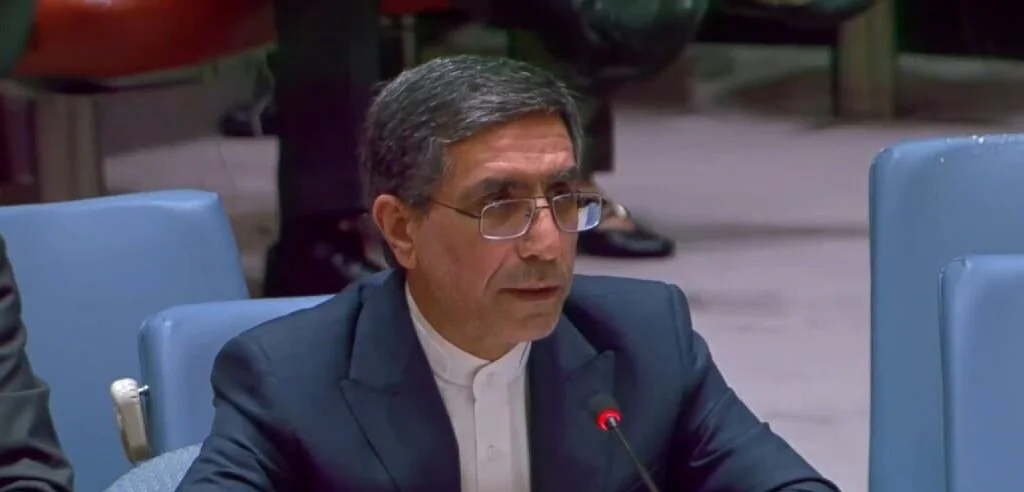
Iran's UN envoy Gholamhossein Darzi told the Security Council that the US and Israel are responsible for disruptions in the Strait of Hormuz, citing attacks on Iranian vessels and a blockade since April 2026.
Published on 30 October 2026
SaveIran tells UN Security Council US is root cause of Hormuz maritime insecurity
Addressing a UN Security Council meeting on maritime security, Iran's envoy Gholamhossein Darzi rejected attempts by Western powers to blame Tehran for disruptions in the Strait of Hormuz, stating that Iran has consistently upheld freedom of navigation as a responsible coastal state for decades, according to a report by Mehr News citing Press TV.
Darzi said that some speakers at the meeting had once again ignored the root causes of the current situation. He emphasized that the responsibility for any disruption, obstruction, or interference with maritime navigation in the Persian Gulf and the Strait of Hormuz lies directly with the aggressors and those who facilitate or assist their act of aggression against Iran. He added that attempts to shift this responsibility onto Iran are unfounded and lack credibility.
The Iranian diplomat clarified that the Strait of Hormuz, a crucial global maritime trade route, remained entirely open and secure until February 28, 2026. Since that date, he noted, the US and Israel launched a war of aggression against Iran, deliberately targeting the country's civilian and maritime infrastructure, ports, and vessels. To illustrate the gravity of the US military campaign, the envoy detailed specific attacks on Iranian assets. He noted that on April 19, 2026, US military forces attacked the Iranian commercial vessel Tuska. Less than two months later, on May 23, the US Central Command (CENTCOM) reported redirecting 100 commercial vessels in a move to enforce what he called an illegal naval blockade against Iran. The envoy further said that on July 23, US forces attacked two Iranian search and rescue vessels, Naji 15 and Naji 16, inside Iran's territorial waters while they were actively engaged in humanitarian operations. Furthermore, the US has maintained a comprehensive blockade on all maritime traffic entering and leaving Iranian ports since April 12, 2026.
According to the Press TV report, the envoy condemned the US military enforcement of the blockade as a flagrant violation of Iran's sovereignty and territorial integrity, and a grave breach of Article 2(4) of the UN Charter, which prohibits the threat or use of force against the political independence of any state. Beyond the military implications, the diplomat highlighted the severe humanitarian toll of the siege. He warned that the US blockade threatens civilian access to food, medicine, fuel, and other essential supplies, imposes collective punishment, and deprives them of essential needs indispensable to their survival.
Reaffirming Tehran's position, the envoy stressed that any restrictions or security measures implemented by Iran in the Strait of Hormuz are entirely defensive and lawful. He declared that as a coastal state, Iran has the legitimate right under international law to take all necessary and appropriate measures to protect its sovereign rights, its territorial integrity, its people, and its vital national interests against the US ongoing threat or aggression. The Iranian representative demanded full accountability for the severe violations of international law and the damages inflicted upon Iranian civilians. He called upon the Security Council to abandon its silence and explicitly demand that the United States immediately cease its unlawful acts. The envoy concluded that Iran will pursue all available legal avenues to ensure that those responsible are held to account, according to Mehr News.
Source: Mehr News — Read original story