Iran: US responsible for consequences of escalating regional tensions
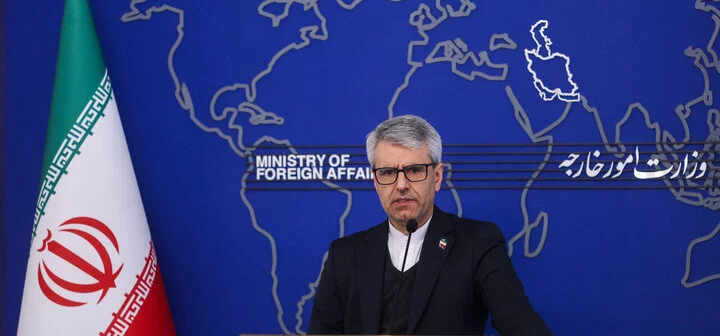
Iranian Foreign Ministry spokesman Esmaeil Baghaei said the US is fully responsible for the outcomes of escalating tensions in the region, citing coordination with Israel in attacks on Lebanon.
Published on 8 June 2026
SaveIran: US responsible for consequences of escalating regional tensions
Iranian Foreign Ministry spokesman Esmaeil Baghaei stated on Monday that the United States bears full responsibility for the consequences of escalating tensions in the region. During his weekly press briefing, Baghaei addressed the Israeli regime's attacks on Lebanon, asserting that no one in the region believes the Zionist regime would act without prior coordination and cooperation with the United States. He emphasized that the US waged a war of aggression against Iran to support the Zionist regime in committing its crimes.
Baghaei further revealed that Iran possesses information indicating coordination between the US and Israel in both offensive and defensive military domains, stressing that Washington cannot be separated from developments linked to the Zionist regime. While acknowledging that some argue the Israeli regime does not always follow Washington’s directives, Baghaei said US responsibility is “clear,” particularly as a party involved in ceasefire arrangements. “Any action in the region—whether directly by the US or through the Israeli regime in Lebanon—makes Washington fully responsible, and the consequences of escalation will rest on it,” he said.
Referring to ongoing diplomatic exchanges amid recent Israeli strikes, Baghaei said the developments have deepened mistrust. He noted that Iran was already exchanging messages with the US under conditions of “severe suspicion,” adding that contradictory US positions and “confusing statements” have contributed to instability in diplomatic efforts. “These 24-hour developments are further aggravating the situation,” he said.
Baghaei stressed that Iran would continue to act in line with its national interests and security needs, adding that Tehran would not allow the Israeli regime and the US to repeat violations while issuing only general statements about maintaining ceasefires. He said all components of the Iranian system and society are prepared for any scenario. He further underlined that the diplomatic track aimed at ending the imposed US-Israeli war of aggression could be affected if its purpose is undermined, noting that diplomacy and field actions are pursued in parallel to safeguard Iran’s interests. “Where necessary, the Armed Forces will act,” he said.
The remarks came amid escalating regional tensions following Israeli strikes on Beirut’s southern suburbs and continued violations of the April 8 ceasefire agreement. In response, Iran launched a series of missile strikes against Israeli military targets. Late Sunday, the Islamic Revolution Guards Corps (IRGC) announced it had targeted the Ramat David airbase with ballistic missiles, describing it as the origin of Israeli aggression against Lebanon, including attacks that caused civilian casualties and displacement in southern Lebanon and Beirut’s Dahiyeh district. On Monday morning, the IRGC launched ‘Operation Nasr (Victory)’ against the Israeli regime’s Tel Nof and Nevatim airbases in the occupied territories, saying the operation was carried out in response to Israeli missile strikes on radar sites inside Iran. Iran’s Foreign Ministry also described the strikes as legitimate self-defense under Article 51 of the UN Charter, reiterating that Tehran’s actions followed repeated Israeli violations of the ceasefire and ongoing aggression against Lebanon. It warned that any further Israeli attacks on Lebanon or Iranian interests would be met with a broader and more forceful response. According to Mehr News, the statements were made during Baghaei's weekly press briefing on Monday.
Source: Mehr News — Read original story