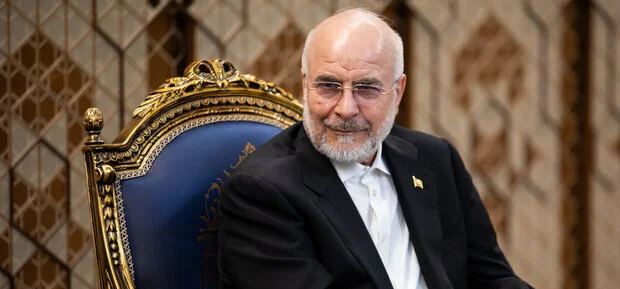
Iran's Parliament Speaker Says US Inflation Expectations Linked to Strait of Hormuz Risks
Iranian Parliament Speaker Mohammad Bagher Ghalibaf said US inflation expectations are influenced by disruptions at the Strait of Hormuz and Bab el-Mandeb, not just interest rates, questioning whether the Federal Reserve can address supply-side shocks through monetary policy alone.
Published on 16 September 2026
SaveIran's Parliament Speaker Says US Inflation Expectations Linked to Strait of Hormuz Risks
Iranian Parliament Speaker Mohammad Bagher Ghalibaf said in a post on X that United States inflation expectations are being shaped by disruptions at key energy chokepoints, particularly the Strait of Hormuz and Bab el-Mandeb, rather than by interest rates alone. He questioned whether the US Federal Reserve could reopen the Strait of Hormuz or increase oil production simply by raising interest rates, suggesting that changes in borrowing costs would not address the supply-side shock caused by disruptions at these strategic waterways.
Ghalibaf argued that the "Strait of Hormuz risk" is a factor determining interest rates and claimed that control over that risk is currently in Iran's hands. He challenged the conventional use of monetary policy to anchor inflation expectations, saying that relying solely on demand-side tools such as interest rates is no longer sufficient under current conditions. In his view, geopolitical factors can have a stronger influence on economic indicators such as inflation.
Under normal conditions, central banks seek to anchor inflation expectations around an inflation target or a credible long-term inflation rate, generally using interest-rate adjustments in response to inflation and economic activity. Ghalibaf argued, however, that the current situation requires financial markets and policymakers to incorporate additional variables, including the status of the Strait of Hormuz and Bab el-Mandeb, into their calculations. He suggested that US inflation expectations would remain difficult to anchor as long as the geopolitical risks surrounding these waterways persist.
Ghalibaf referenced a modified version of the Taylor Rule, adding variables related to the Strait of Hormuz and what he termed the associated risk premium. He said the purpose was to examine whether an interest-rate increase could reduce such risks or increase oil supply. The comments were reported by Mehr News.
Source: Mehr News — Read original story