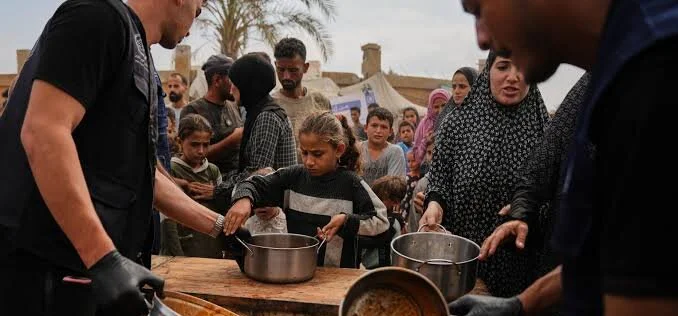
WFP cuts food aid to 700,000 Palestinians in Gaza and West Bank due to funding shortfall
The UN World Food Programme has reduced food assistance to 500,000 people in Gaza and 200,000 in the West Bank because of a severe funding shortage, warning that life in Gaza remains "absolutely brutal."
Published on 20 October 2026
SaveWFP cuts food aid to 700,000 Palestinians in Gaza and West Bank due to funding shortfall
The United Nations World Food Programme (WFP) has been forced to reduce food assistance to 500,000 Palestinians in the Gaza Strip and 200,000 in the occupied West Bank due to a severe funding shortage. Carl Skau, acting executive director of the WFP, said the number of people receiving assistance in Gaza was cut this month from 1.6 million to 1.1 million, while in the West Bank the figure was halved from 400,000 to 200,000. He urged the international community to provide $450 million immediately so the agency can restore the cut assistance and sustain hot meals and food parcels across both territories for the next six months.
According to the WFP, food rations in Gaza have been cut by half. Families that continue to receive support will get only one food parcel instead of two and a smaller bag of wheat flour. The number of hot meals distributed daily has fallen from 250,000 to 150,000, with those living in hard-to-reach areas near the so-called "yellow line" now receiving a meal only every other day. Cash assistance has also been reduced for 75,000 families. The agency said it can still support bakeries covering roughly one-third of Gaza's bread needs, provide nutrition assistance to about 300,000 women and children, and deliver school snacks to 200,000 children, but these efforts remain under severe strain.
Skau, who had just visited both territories, told UN correspondents in a briefing from occupied Jerusalem that UN teams recorded about 50 attacks per day in Gaza over the past week, according to Press TV. While the agency has managed to push back on famine since the October 2025 ceasefire, an estimated 1.4 million people, 67 percent of Gaza's population, continue to face acute food insecurity at crisis levels or worse, with around 200,000 requiring immediate food aid to prevent death from hunger. He stressed that the cuts are not the result of declining needs or lack of access, but solely of insufficient funding; the WFP received less than half as much money for its Palestine operations in 2026 as in previous years.
The situation is compounded by Israeli restrictions. Last week the Israeli military temporarily halted the entry of commercial goods, including food, into Gaza. While it later said it would resume coordinating commercial trucks, it warned that any reports of merchants paying taxes to Palestinian authorities could lead to the revocation of their licenses. Skau noted that people closest to the yellow line, along with the sick, mothers, and children at risk of malnutrition, will be prioritized under the reduced program. In the occupied West Bank, Skau said escalating attacks by Israeli settlers have transformed a long-standing human-rights and protection crisis into a hunger crisis. Food insecurity has more than doubled in the last three years, and nearly one million Palestinians now require food assistance, according to Mehr News.
Source: Mehr News — Read original story