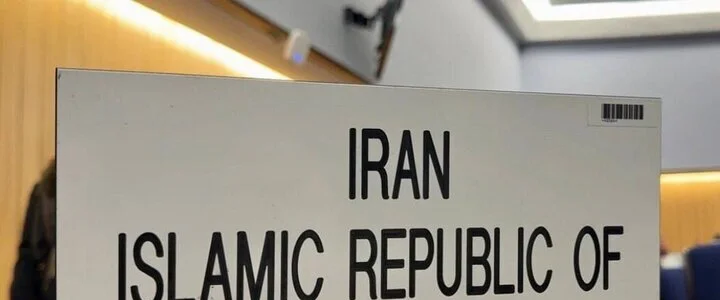
Iran rejects UAE anti-Iran document in IMO as legally baseless
Iran has submitted a document to the International Maritime Organization (IMO) rejecting a UAE-backed resolution, arguing that the root cause of maritime risks in the Persian Gulf is US-Israeli aggression against Iran.
Published on 7 July 2026
SaveIran rejects UAE anti-Iran document in IMO as legally baseless
Iran has formally rejected a document submitted by the United Arab Emirates (UAE) to the International Maritime Organization (IMO), calling it politically motivated and legally unfounded. The Iranian document, submitted on July 6, reiterates Tehran's longstanding legal position on the Strait of Hormuz and emphasizes that the fundamental cause of current maritime risks in the Persian Gulf, the Sea of Oman, and the Strait of Hormuz is the aggression carried out by the United States and the Israeli regime against Iran, including through the participation, support, or facilitation by the UAE and other states.
According to the Iranian document, the IMO Council lacks the authority to determine international responsibility, resolve disputes concerning sovereignty or jurisdiction, or establish the legal regime governing a waterway. Iran urged the Council to maintain neutrality, avoid adjudicating legal disputes, and preserve its technical and non-political role. The document states that any deliberation by the Council must strictly remain technical, neutral, balanced, comprehensive, and non-discriminatory, and must not prejudice the legal positions, sovereignty, sovereign rights, responsibilities, and legitimate interests of Iran.
Iran emphasized that it places utmost importance on maritime safety, security of navigation, welfare of seafarers, search and rescue operations, emergency response, port activities, marine environmental protection, and the safe, orderly, and predictable conduct of maritime transport. It noted that the Strait of Hormuz remains accessible to maritime navigation, contingent upon safety and security coordination.
The document details that during the war and ceasefire period, 116 incidents involving 367 vessels were recorded, including 254 ships that were sunk or otherwise totally destroyed. The human impact included 63 seafarers martyred, 70 injured, 8 missing, and 62 taken hostage. Damage was also sustained by four maritime operations buildings, four Vessel Traffic Services/control stations, and eight relay units.
Iran reaffirmed its legal position concerning passage through the Strait of Hormuz, stating that it is not a party to UNCLOS and is not bound by the treaty-based regime invoked by certain states. Iran asserted that parts of the Strait of Hormuz fall within its territorial waters, and under international law, a coastal State exercises sovereignty, jurisdiction, and sovereign authority over its territorial sea. Iran's consistent position is adherence to the regime of innocent passage and non-acceptance of the treaty-based regime of transit passage.
The document also rejected allegations of mine-laying by Iran as entirely baseless and unsupported by any credible evidence. Iran called on the IMO Council to refrain from adopting the UAE-backed proposal and to ensure that any future reporting or action concerning the Persian Gulf, the Sea of Oman, and the Strait of Hormuz remains neutral, balanced, comprehensive, and non-discriminatory.
According to Mehr News, the Iranian document was submitted to the IMO in response to a UAE-sponsored resolution that Tehran says lacks legal basis and is politically motivated.
Source: Mehr News — Read original story