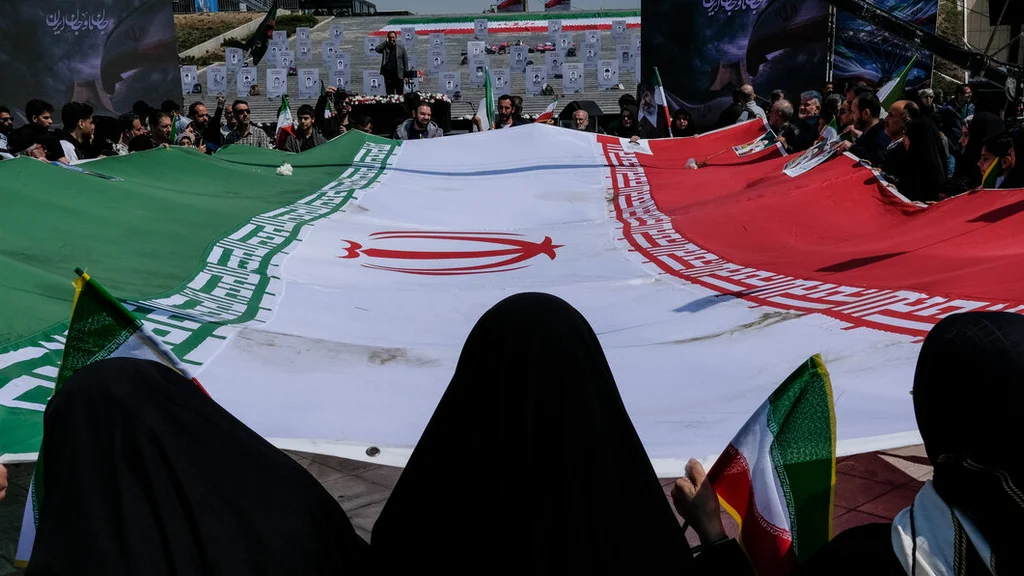
Iran's Resolve Unbroken After 40-Day War, US Media Reports
A 40-day US war aimed at forcing Iran's surrender has failed, as Tehran hardens its stance on the Strait of Hormuz, according to CNN. The report highlights depleted US weapons stockpiles as a factor in Iran's calculations.
Published on 11 August 2026
SaveIran's Resolve Unbroken After 40-Day War, US Media Reports
The forty-day war launched by US President Donald Trump, aimed at changing Iran's behavior and imposing Washington's demands, was expected to end with a swift and decisive victory. Trump repeatedly spoke of Iran's "unconditional surrender," believing that military pressure would force Tehran to accept American terms. However, post-war developments paint a different picture, one that even American media outlets acknowledge.
CNN, in a report recalling Trump's stances on Iran's surrender, wrote that Tehran has not only refused to surrender but has hardened its demands regarding the Strait of Hormuz. The American outlet viewed Iran's positions on Hormuz as a sign that Tehran assesses it has greater bargaining power vis-à-vis Washington. CNN also cited the depletion of American weapons stockpiles as a factor influencing Tehran's calculations, indicating that the prolonged war has imposed costs on both sides.
Trump's initial calculation was built on the assumption that America's military superiority could force Iran to back down quickly. The military strikes were not merely meant to cause destruction; their main objective was to change Iran's political behavior. However, there is a crucial difference between inflicting military damage and achieving political victory. A country may destroy targets, but if it cannot compel the other side to accept its political demands, it has not achieved strategic victory.
The Strait of Hormuz holds particular significance in this equation. It is one of the world's most vital energy transit routes, and any instability there can affect the oil market and the global economy. A significant part of America's military presence in the Persian Gulf has been justified by energy security and freedom of navigation. If Iran can turn Hormuz into an effective lever in negotiations, it not only signifies an increase in Tehran's power but also raises questions about the efficacy of America's military presence in the region.
Another factor CNN mentioned is the depletion of American weapons stockpiles. In a short war, technological superiority and high offensive volume can be decisive. But the longer the war drags on, the more important production and replacement capacity become. The depletion of stockpiles, while not signifying American incapacity, can raise the cost of continuing the war, potentially altering the opposing side's calculations.
One of the most important lessons of the war is the difference between military success and strategic victory. Trump's declared goal was Iran's surrender. If Iran, after enduring the pressure of war, can maintain its positions and even escalate some demands, it means the United States has been unable to extract the political outcome it expected from its military superiority.
The war has also imposed costs on the United States, including financial costs, consumption of munitions, strain on military production capacity, and consequences for the energy market. On a global level, any increase in uncertainty in the Persian Gulf can affect the energy market, oil prices, and maritime transport. The longer the war continues, the broader the scope of its costs becomes.
The Strait of Hormuz has become a symbol of the shifting equation. Iran is trying to show that regional security cannot be defined solely through the presence of foreign powers, and that regional actors can still influence security and economic equations. Hormuz is not merely an issue of oil or shipping; it is part of the contest over the future of the Persian Gulf's security order.
According to Mehr News Agency, the forty-day war was supposed to bring Iran to the point of surrender, but now even American media outlets speak of a shift in Tehran's calculations and an increase in its bargaining power. Iran has not surrendered, has adopted a tougher stance on Hormuz, and the depletion of American weapons stockpiles has been noted as one of the factors influencing Tehran's calculations. This does not mean ignoring America's military power or the damage inflicted on Iran; rather, the issue concerns the political outcome of the war. The calculation that was supposed to bring Iran to surrender has now become a test of America's ability to impose its will—and that is the clearest sign that Trump's original equation has been inverted.
Source: Mehr News — Read original story