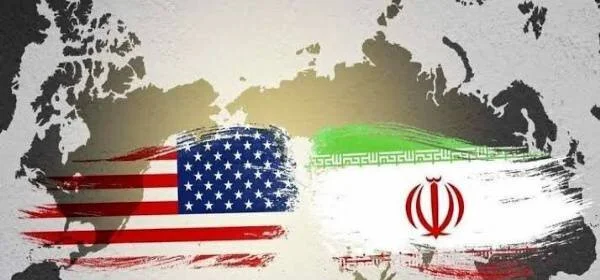
CENTCOM forms Iron Gate task force to restrict weapons transfers to Iran
US Central Command has announced a new task force, Iron Gate, to curb transfers of advanced weapons and sanctioned goods to Iran via land borders and the Caspian Sea. The unit will be based in Tampa with about 20 personnel.
Published on 8 November 2026
SaveCENTCOM forms Iron Gate task force to restrict weapons transfers to Iran
US Central Command (CENTCOM) has announced the formation of a special task force called Iron Gate, which is intended to work with various US government institutions to restrict routes for transferring advanced weapons, dual-use technologies and sanctioned goods to Iran through land borders and the Caspian Sea. According to Reuters, the task force will be based in Tampa, Florida, with about 20 military and civilian personnel. Admiral Brad Cooper, commander of CENTCOM, said the measure would limit Iran's ability to finance and rebuild weapons industries and replenish military stockpiles. CENTCOM also said the naval blockade has so far prevented the export of more than 25 billion dollars of Iranian crude oil.
The announcement comes after months of a US naval blockade of Iran. The article argues that the formation of Iron Gate reflects an effort by Washington to expand its tools of pressure after failing to achieve its declared objectives through military means, rather than a new operational capability for a complete blockade. It notes that a Wall Street Journal report on October 22 about border restrictions in Iraq and Pakistan and delays of trucks at the Turkish border indicated that such pressure was already under consideration before the task force was officially announced.
The article points to geographical constraints. Iran shares land borders with seven countries totaling about 5,894 kilometers, according to data in the CIA World Factbook, and has roughly 740 kilometers of coastline on the Caspian Sea. Effective monitoring of this expanse would require sustained cooperation from neighboring countries, customs control, accurate intelligence and coordinated participation by security and economic institutions, the article says, none of which is directly at CENTCOM's disposal. It adds that the plan depends on the political will of governments including Iraq, Turkey, Pakistan, the Republic of Azerbaijan, Armenia and Turkmenistan, each with independent economic, security and strategic considerations, and that recent restrictions at the Iraqi and Pakistani borders showed crossings remain subject to political developments and bilateral negotiations.
On the Caspian Sea, the article notes that the 2018 Convention on the Legal Status of the Caspian Sea, signed by Iran, Russia, the Republic of Azerbaijan, Kazakhstan and Turkmenistan, prohibits in paragraph 6 of Article 3 the presence of armed forces of non-coastal countries, while paragraph 7 bars member countries from making their territory available for military action against another coastal country. This, the article says, places a serious legal limit on any direct US military presence there, though Washington could still use intelligence, sanctions and diplomacy.
Regarding the task force's structure, the article says a 20-person coordination mechanism is not a military force deployed at Iran's borders or an operational unit for seizing cargoes. Such a body could raise the cost of Iran's trade through intelligence sharing, identifying trade networks, targeted sanctions and pressure on intermediary companies, but stopping all goods routes in a large country with a diverse economy and many neighbors is far more complex, it says. The article concludes that Iron Gate should be seen as an attempt to shift more of the confrontation into economics, trade and logistics, and that claims of a complete blockade are not compatible with the region's geographical and geopolitical realities. According to Mehr News, the report added that the plan may disrupt part of Iran's transactions but will not by itself create a comprehensive blockade.
Source: Mehr News — Read original story