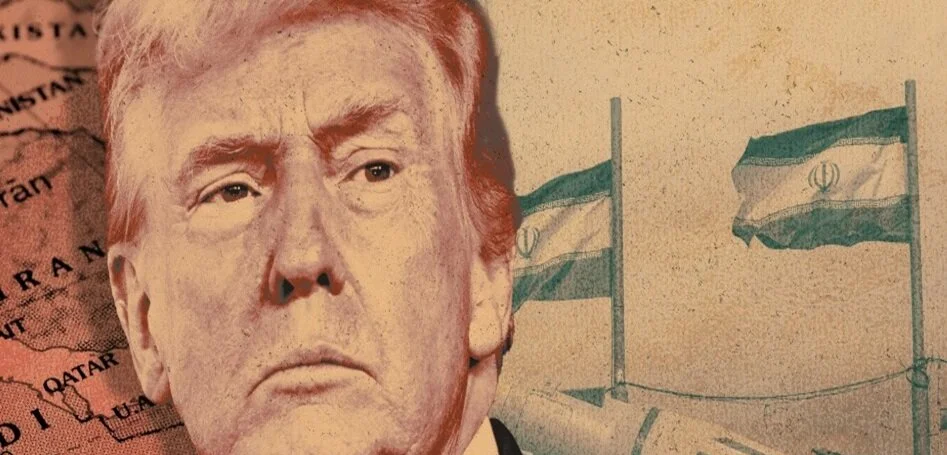
Atlantic Report Says Iran War Has Angered and Constrained Trump
The Atlantic reports that Trump's inability to end the war with Iran has angered him and restricted his decision-making. Rising diesel prices and Republican electoral concerns are cited as consequences.
Published on 14 October 2026
SaveAtlantic Report Says Iran War Has Angered and Constrained Trump
More than seven months after US President Donald Trump initiated a war against Iran, the conflict has become a factor eroding his political credibility and restricting his room for maneuver, according to a report in The Atlantic magazine. The report, citing sources close to Trump, states that his inability to end the war has made him extremely angry and has unusually constrained his decision-making power. Trump, who is accustomed to attracting the attention of world leaders and the media, now faces a situation in which neither his threats have forced Iran to retreat nor have political and economic pressures produced the results Washington sought.
The Atlantic describes Trump as losing control because Iran is not yielding to his demands. The report refers to the resumption of tanker threats in the Strait of Hormuz and a rise in diesel prices in the United States, factors that have increased the economic costs of the crisis for American citizens and intensified Republicans' concern about its electoral consequences. The average price of diesel in America has exceeded six dollars per gallon, according to the report. Since a large portion of consumer goods in the US is transported by truck, higher fuel costs can increase transportation expenses and ultimately the final price of goods, making the foreign crisis a tangible issue in citizens' economic lives.
The main problem for Trump is not only the prolongation of the conflict but the gap between America's declared objectives and the results on the ground. The US government entered the war assuming that weapons superiority and operational capability could change Tehran's calculations in a short period and provide the ground for imposing Washington's demands. However, military superiority alone does not guarantee the achievement of political objectives. The greater the gap between initial objectives and final results, the more the political costs of continuing the conflict increase. Trump must account for the expectations he created by promising a display of power and a quick result, while also facing the economic and political consequences of the crisis's continuation. Retreating without achieving declared objectives risks weakening political credibility, while continuing the conflict brings increasing costs.
According to The Atlantic, Republicans are worried that the rise in energy prices will strengthen the Democrats' position in the midterm elections and lead to the loss of control of the House of Representatives and the Senate. This concern shows that the war's consequences are not limited to foreign policy or military relations and can affect the balance of power inside America. A change in the composition of Congress can make advancing the government's programs more difficult and provide the ground for increased political and oversight pressures on the White House. For Republicans, the rise in fuel prices is not merely a livelihood issue but a factor influencing the evaluation of the government's performance and the fate of electoral competitions.
In another part of its report, The Atlantic writes that Trump has been searching for someone to blame and appears to consider Ukraine responsible for part of the problems, even though attributing the rise in global oil prices to a country struggling with its own existential threats faces serious difficulties. Blaming Ukraine can be seen as an attempt to divert public attention from the US government's decision to start the war against Iran. Determining the factors affecting global oil prices requires examining supply, demand, market expectations, and geopolitical developments, and all fluctuations cannot be attributed to a single factor. Overall, The Atlantic's report shows that the war against Iran has become a difficult test for Trump, in which America's military power alone has not provided an easy way out. The narrowing of political options, increased economic costs, and concern about electoral consequences have reduced the American president's room for maneuver. According to Mehr News, the issue for Washington is now finding a way to end the confrontation without accepting heavy political and strategic costs.
Source: Mehr News — Read original story