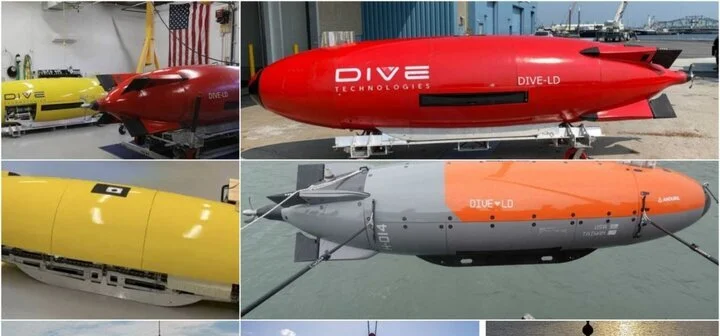
Iran's Seizure of US Underwater Drone Raises Questions About Washington's Concerns
Iran's capture of a US-made unmanned underwater vehicle in the Strait of Hormuz has prompted analysis of its technological and strategic value, despite Pentagon claims it was outdated.
Published on 10 September 2026
SaveIran's Seizure of US Underwater Drone Raises Questions About Washington's Concerns
Iran's acquisition of a US-made unmanned underwater vehicle (UUV) in the Strait of Hormuz has drawn attention to the growing role of unmanned systems in maritime competition. The Pentagon has stated that the drone was outdated, suffered a technical malfunction, and carried no sensitive information. However, reports from American and Western media, including the Financial Times, indicate that such systems are integral to US naval operations for seabed reconnaissance, mine countermeasures, and maritime surveillance.
The Strait of Hormuz is a critical energy and trade chokepoint, and any disruption to its security could have significant international economic and political consequences. In recent years, the United States has increasingly deployed unmanned systems alongside traditional naval vessels, submarines, and patrol aircraft to enhance its surveillance and intelligence-gathering capabilities in the region. UUVs, unlike aerial drones, can operate at great depths with a lower signature, gathering data on the underwater environment, seabed conditions, and military activities. This information is vital for naval forces, as understanding the operational environment is a key aspect of maritime military competition.
The value of the captured UUV extends beyond its estimated $2.5 million price tag. Access to an operational system allows for detailed analysis of its design, propulsion, sensors, communication equipment, energy management, and overall architecture. According to H.I. Sutton, a renowned analyst of undersea technologies, this UUV is more sophisticated than many Iranian models, and Iran's access to it could provide a significant opportunity to study the technology and advance its own unmanned undersea capabilities. Even if the Pentagon downplays the intelligence value, obtaining a specimen of a rival's advanced technology is a technological opportunity in itself.
The Pentagon's claim that the system was aging and malfunctioning does not necessarily diminish its operational value. Unmanned systems are often designed for high-risk environments where the use of more expensive equipment or human personnel is undesirable. The presence of such a system in the region underscores that maritime competition is no longer confined to warships, coastal defense missiles, or submarines; a substantial portion has shifted to unmanned technologies and information superiority. For Iran, the event demonstrates the capability to detect and acquire an American subsurface system in an environment where the US believes it can operate with advanced technologies, and it offers an opportunity to study the system and develop countermeasures.
Washington's efforts to portray the incident as the loss of an obsolete system must be analyzed in the context of managing political and intelligence repercussions. The US likely does not want Iran's access to an operational US system to be framed as a significant naval and technological achievement. Ultimately, the significance of capturing this UUV should not be measured solely by its price tag. The true value lies in Iran obtaining an actual example of US technology employed in the Persian Gulf and the Strait of Hormuz. While the system may be older and sensitive mission data might not be accessible, the technology, design, and understanding of its operational mechanics can still hold considerable value. As the report by Mehr News added, Washington describes the system as outdated and insignificant, yet this raises a crucial question: if the drone lacked operational value, why did the US deploy it in one of the world's most sensitive waterways as part of its naval missions?
Source: Mehr News — Read original story