Iran SNSC secretary says Persian Gulf internet and AI infrastructure within Iran's reach
Secretary of Iran's SNSC Mohsen Rezaei told Press TV that regional communication and technology infrastructure could be targeted in a renewed conflict with the US, highlighting the vulnerability of Persian Gulf digital assets.
Published on 17 October 2026
SaveIran SNSC secretary says Persian Gulf internet and AI infrastructure within Iran's reach
Secretary of Iran's Supreme National Security Council (SNSC) Mohsen Rezaei said in an interview with Press TV that regional communication and technology infrastructure could be targeted if a conflict with the United States were to expand. The remarks, reported by Mehr News, draw attention to the vulnerability of digital infrastructure in the Persian Gulf, which includes submarine internet cables, data centers, and artificial intelligence facilities. These assets, though not military in nature, underpin significant portions of the region's economies, commerce, communications, and technological activities.
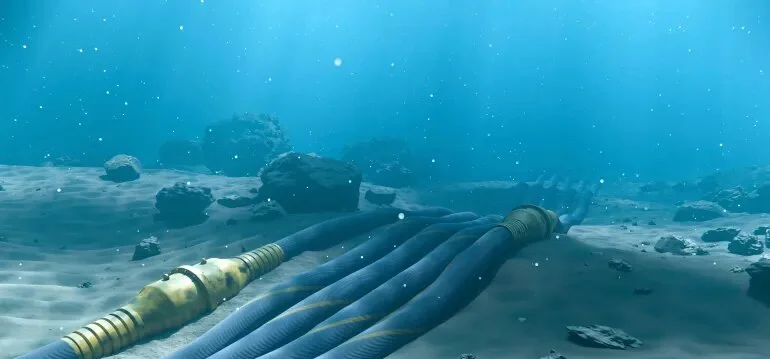
Submarine fiber-optic cables carry a major share of international internet traffic, transmitting data over long distances via light pulses. Messaging, video calls, cloud services, and many international financial transactions rely on these networks. The Persian Gulf's geographical position, linking Asia, Europe, and other economic hubs, gives its data routes particular significance. The Strait of Hormuz is also crucial to security and economic calculations due to its role in maritime transport and proximity to regional infrastructure. However, cable routing and dependency vary by country, so not all networks rely on a single path.
Damage to a submarine cable does not necessarily mean a complete loss of internet access, as networks typically have multiple paths and traffic can be rerouted. But rerouting can come at a cost: if multiple paths are damaged or alternative capacity is insufficient, slower speeds, higher latency, and service disruptions may occur. Repairing submarine cables is time-consuming, requiring specialized vessels and favorable conditions. The Persian Gulf Arab states, particularly Saudi Arabia and the United Arab Emirates, have invested heavily in digital economies, cloud services, and AI. Data centers, which store and process vast amounts of information, depend on reliable power, cooling, high-speed connectivity, and specialized equipment. Disruption to any of these can impair operations. AI training and operation require substantial computing power, energy, and data transmission infrastructure, and connectivity between data centers, cloud networks, and users is integral to service delivery. Any disruption to communication infrastructure or energy supply can raise operational costs for technology companies and delay development plans.
Data centers may use diverse communication routes, redundant systems, and emergency power sources, so vulnerability depends on technical design, geographical distribution, protection level, and capacity to shift workloads. Still, the interdependence of these infrastructures shows that digital security is linked to economic resilience and national security. Should conflict extend to digital infrastructure, impacts could spread to financial services, e-commerce, transportation, corporate communications, and public services. Companies relying on cloud computing or cross-border communications may face operational disruptions and increased costs, a particular concern for countries seeking foreign investment and a stronger position in the digital economy. According to Mehr News, the concerns underscore that rivalry and tension in the Persian Gulf extend beyond military capabilities or energy exports, as subsea cables, data centers, and AI infrastructure have become strategic regional assets.
Source: Mehr News — Read original story