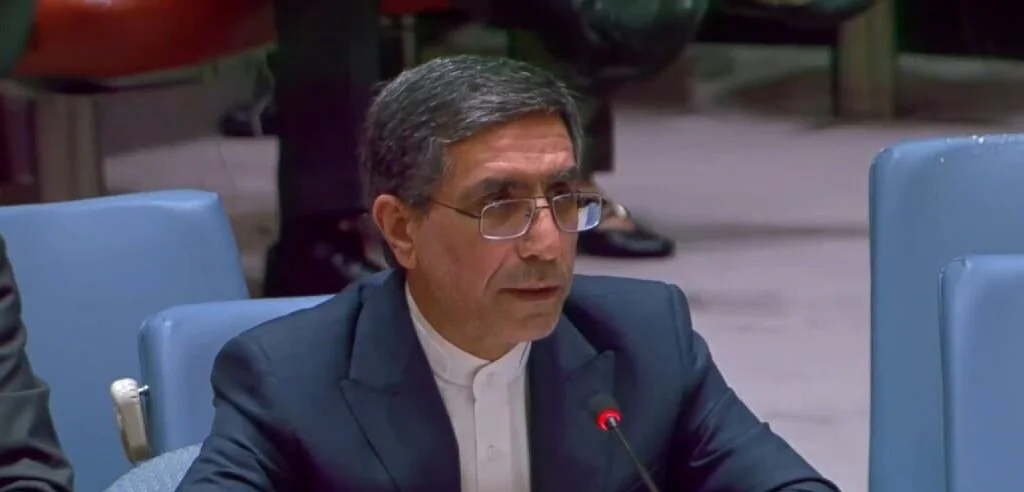
Iran UN envoy says no state can unilaterally rewrite NPT
Ambassador Gholamhossein Darzi told the UN General Assembly that Article IV of the NPT guarantees states the right to peaceful nuclear energy, and that no country can unilaterally rewrite the treaty.
Published on 24 October 2026
SaveIran UN envoy says no state can unilaterally rewrite NPT
Iran's ambassador to the United Nations, Gholamhossein Darzi, addressed the UN General Assembly and pushed back against Western pressure over Tehran's nuclear programme, according to Mehr News. Darzi asserted that Article IV of the Non-Proliferation Treaty (NPT) guarantees all state parties the right to develop peaceful nuclear energy, including the full nuclear fuel cycle. He said the United States seeks to deny Iran that right while claiming to uphold the treaty, and stated that no state can unilaterally rewrite the treaty or impose its own political veto.
The Iranian envoy accused Washington and Tel Aviv of launching two separate wars of aggression against Iran, in 2025 and 2026. He said the military strikes specifically targeted nuclear facilities that were under the safeguards and monitoring of the International Atomic Energy Agency (IAEA). Darzi condemned what he described as the silence of the international community, noting that neither the IAEA leadership nor the UN Security Council has formally condemned the attacks on safeguarded civilian infrastructure. He criticised what he called the hypocrisy of the international system for pressuring the victim of military aggression while allowing the aggressors to escape accountability.
On inspections, Darzi clarified that Tehran has neither abandoned nor formally suspended its safeguards obligations. He stressed, however, that the military attacks have fundamentally altered security conditions on the ground, making physical inspections unsafe without adequate security guarantees. He said responsibility for those circumstances rests with the aggressors, not Iran.
The remarks place Iran's position on the NPT and its safeguards agreement with the IAEA before the General Assembly amid continuing tension over its nuclear programme. According to Mehr News, the envoy's address focused on the treaty rights of state parties and on the security conditions affecting international monitoring of Iran's nuclear facilities.
Source: Mehr News — Read original story