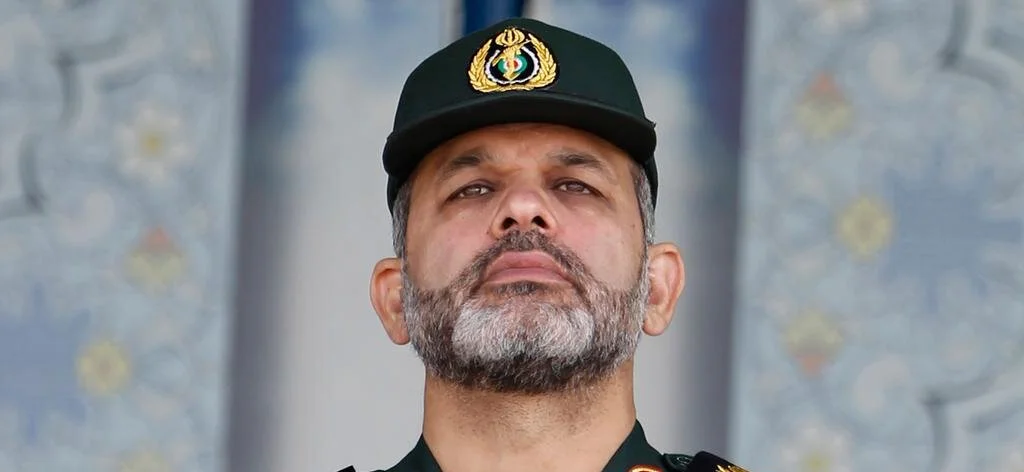
IRGC Commander Says No Outside Powers Allowed in Persian Gulf
IRGC Commander Major General Ahmad Vahidi stated that security in the Persian Gulf and Strait of Hormuz must be maintained by regional countries, calling the waterway a strategic red line for Iran.
Published on 9 October 2026
SaveIRGC Commander Says No Outside Powers Allowed in Persian Gulf
In a message released on Thursday to mark IRGC Navy Day, Commander of the Islamic Revolution Guards Corps Major General Ahmad Vahidi emphasized that security in the Persian Gulf and the Strait of Hormuz must be ensured by regional countries. He described the waterway as a strategic red line for Iran. "Our strategy in this arena is clear, principled and unchangeable: security in the Persian Gulf and the Strait of Hormuz is indigenous and regional, and no extra-regional power has the right to threaten, establish a domineering presence in, or interfere in it," Vahidi said.
General Vahidi characterized the Strait of Hormuz as a vital artery for global energy supplies, adding that safeguarding it is essential to protecting Iran's national interests, public security and national dignity. He stated that the IRGC Navy is fully coordinated with the Iranian Navy and prepared to respond decisively to any enemy miscalculation involving unauthorized vessel movements through waters under its management in the region.
The commander cited the IRGC Navy's capabilities, including precision-guided missiles, attack drones, fast vessels, electronic warfare systems and coastal defense networks, as elements of its readiness. "Any threat from the US-Israeli camp will be met with this force's vigilance, unified command and comprehensive readiness," Vahidi said.
He called on IRGC naval personnel to remain prepared to defend Iran and the strategically important Strait of Hormuz under the command of Leader of the Islamic Revolution Ayatollah Seyed Mojtaba Hosseini Khamenei, the Commander-in-Chief of the Iranian Armed Forces. The message was reported by Mehr News Agency (MNA).
Source: Mehr News — Read original story