Ayatollah Khamenei: Nations will no longer be shield for US bases
Ayatollah Seyyed Mojtaba Khamenei stated that regional nations will no longer serve as shields for US military bases, emphasizing America's declining status.
Published on 31 May 2026
SaveAyatollah Khamenei: Nations will no longer be shield for US bases
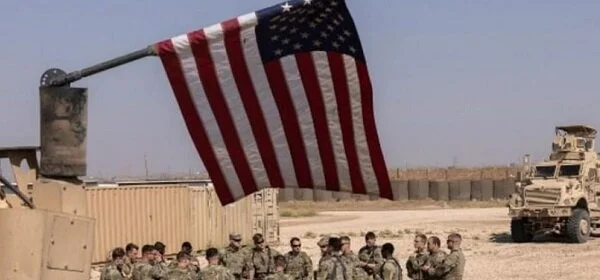
In a recent message to the International Hajj Congress, Ayatollah Seyyed Mojtaba Khamenei, the Leader of the Islamic Revolution, emphasized a fundamental point: "The nations and lands of the region will no longer be the shield of American bases. In addition to no longer having a safe haven for evil and the establishment of military bases in the region, America is moving away from its previous status day by day."
Regarding this key issue, several points can be noted. First, although the establishment of military bases in Persian Gulf countries was said to defend Arab interests and strengthen regional security, the aggression of the United States and the Zionist regime against Iran and the outbreak of a regional war proved that the main tasks of these bases are to support Israeli interests, sell weapons to Arab countries, create divisions between Iran and its neighbors, and prevent the formation of a joint security regime without foreign interference. In this war, Persian Gulf countries and elites admitted, sometimes publicly and sometimes in private, that the most important problem of US military bases for their countries was the preference of US interests over the interests of host countries, which suppressed diplomacy and prevented peace.
Second, before the US aggression, Trump's threats against Iran and the growing possibility of war spreading caused regional countries to take extensive diplomatic measures to manage the situation. Persian Gulf countries, mainly seeking economic progress under the guise of security, were concerned about the possible expansion of the US war against Iran and repeatedly told US officials that the dimensions of the war would not be limited to Iran's attack on US war navies but would also include military bases. Leaders of Persian Gulf countries, knowing that Iran would definitely attack US bases, repeatedly called on the US to refrain from aggression. However, the US, on the orders of its president and to satisfy Netanyahu, attacked Iran, exposing its military bases to destruction and forcing its military forces to flee. Arab countries were the main victims of this aggression.
Third, apart from Arab countries, today the countries of the world have also concluded that US military bases, as an important part of US military power, have heavy economic and social costs for host communities, including economic underdevelopment, growth of prostitution, human trafficking, violence against women and prisoners, spread of sexually transmitted diseases, and environmental destruction through fossil fuel use and greenhouse gas emissions. For example, during construction of bases like Camp Humphreys in South Korea or Shoalwater Bay in Australia, millions of trees were cut down and vital species' habitats were destroyed. In these bases, no host country personnel are present, and in some cases, such as the US base in Okinawa, Japan, guest country military personnel enjoy judicial immunity. In some bases, houses are built for military personnel and their families to live for years. The economic costs incurred by hosts to maintain these bases, if spent on domestic projects, would be a main factor in progress.
Fourth, the key point of the Leader's statements is that after the US aggression against Iran and the decisive defeat of the aggressor, the world gradually believes that nations and governments should not be shields for American bases to secure US and Israeli interests. Naturally, this belief will accelerate America's decline. At the same time, regional countries suffering due to America's excesses should know that Iran not only does not want war and instability in the Persian Gulf but has also been emphasizing ensuring collective security in West Asia using indigenous capabilities for many years. Accordingly, it is necessary to form a common vision, considering the continuation of US regional threats and the possibility of a repeat of war in the future, to defend the security of the Persian Gulf with the presence of Iran and bordering countries. This is an inevitable matter, and the sooner it happens, the better for Muslim countries and nations of the region. According to Mehr News Agency, the Leader's message highlights the shifting dynamics in the region.
Source: Mehr News — Read original story