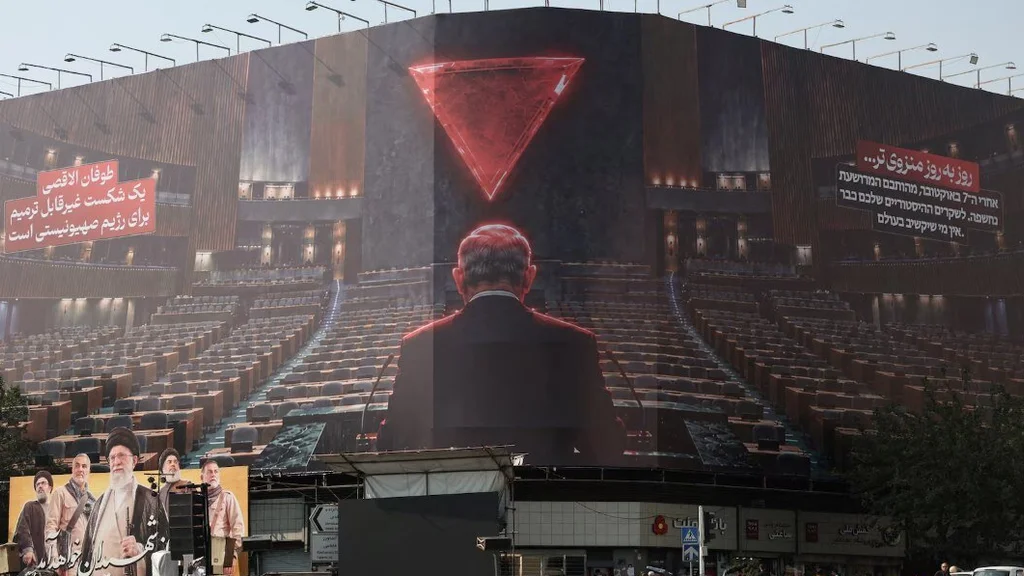
Mehr News analysis questions whether US military power can achieve strategic defeat of Iran
A Mehr News analysis examines speculation about possible US use of unconventional weapons against Iran's underground facilities and argues that destructive capability does not guarantee strategic or political results.
Published on 12 November 2026
SaveMehr News analysis questions whether US military power can achieve strategic defeat of Iran
An analysis published by Mehr News has examined recent speculation in some media outlets about the possibility that the United States could use unconventional weapons, including nuclear weapons, against Iran's underground facilities in any future confrontation. The article frames the discussion around a broader question: whether Washington's military power, even at its highest level, can produce Iran's strategic defeat.
The analysis cites a report by the Middle East Monitor news website, which examined the possibility of using nuclear weapons against Iranian underground sites and concluded that even such an action would not guarantee Iran's surrender or the achievement of Washington's strategic objectives. Mehr News argued that the importance of the debate lies not only in an extreme military scenario but in what it described as signs of the limits of US military power against a country whose key capabilities are not confined to a single geographic point or a set of identifiable facilities.
The article identified several limitations. First, it said Iran's nuclear program is knowledge-based: physical facilities, equipment and buildings may be damaged or destroyed in a military operation, but technical knowledge, accumulated experience, specialized human resources and the ability to reproduce technology cannot be eliminated as easily. It said the program has developed over several decades and rests on a network of specialists, scientific centers, operational experience and industrial capacity, so heavy damage to existing facilities would not necessarily end the country's scientific and technological capacity. The same, it argued, applies to other strategic sectors whose capabilities have partly become knowledge and experience.
Second, the analysis drew a distinction between operational victory and strategic victory. It said the US military has a high capacity for long-range operations and for damaging specific targets, but destroying military targets does not by itself achieve an operation's political objectives. The ultimate aim of any military strategy, it said, is to create conditions in which the opposing side abandons its policy or accepts the aggressor's demands, and at that point military calculations meet political and social realities. It posed questions about whether damage would change Tehran's political calculations, eliminate its scientific and industrial capacity, or break the political will of a country, and said such answers cannot be determined merely by calculating explosive power or the extent of destruction.
Third, the article addressed the political and international consequences of any US use of nuclear weapons. It said such an action would not be merely a military operation but could become a regional and international crisis, and would contradict Washington's long-standing presentation of itself as a defender of the nuclear non-proliferation regime. It said the move would draw widespread international criticism and weaken US political and moral credibility on non-proliferation, and could weaken the normative threshold against the use of such weapons and prompt other governments to review their defense and nuclear policies.
The analysis also said the consequences would not be limited to Iran's borders. It cited Iran's geographical position and its economic, environmental and security ties with neighboring countries, warning that radioactive contamination could have widespread human and environmental effects, potentially affecting neighboring countries, water resources, agriculture and the regional environment. It said such an action could create political and security instability in West Asia and that the cost would extend to the security of US regional allies, US economic interests and the stability of strategic trade and energy routes.
In conclusion, Mehr News argued that military power can change battlefield equations but is alone incapable of determining all political and strategic results. It said the ability to inflict heavy damage on infrastructure is different from destroying a country's knowledge, political will, capacity to rebuild and national power, and that even weapons of unprecedented destructive power cannot guarantee the political outcome Washington wants. According to Mehr News, the issue is not how much destructive power the United States possesses but whether it can rely on that power to impose its desired political result on Iran.
Source: Mehr News — Read original story