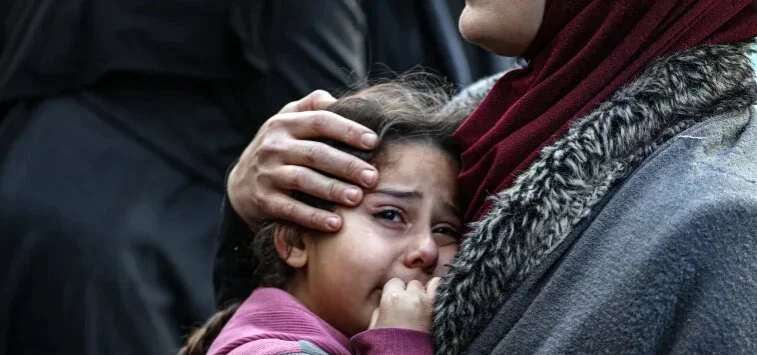
Mehr News commentary urges world not to forget Gaza's winter crisis
A Mehr News analysis says winter conditions, aid restrictions and flooding have worsened Gaza's humanitarian crisis, and warns that attention has shifted away from Palestine.
Published on 21 November 2026
SaveMehr News commentary urges world not to forget Gaza's winter crisis
A large part of Gaza's population is living in tents or damaged buildings that offer little protection from rain, wind or winter cold, according to a Mehr News analysis. The report, citing a United Nations representative, said Israeli restrictions on the entry of winter supplies and aid, combined with limited financial resources, exposure to cold and damp, malnutrition, scarce medical facilities, flooding, destroyed infrastructure, flooded shelters for displaced people and sewage contamination of water sources, have raised rates of respiratory illness, infections and hypothermia. The analysis said mortality has risen as a result, particularly among children.
The report argued that the situation goes beyond a human rights violation and amounts under international law to a war crime, stating that while winter weather is not itself a crime, deliberate restrictions on food, medicine, fuel and shelter, or the use of starvation as a method of warfare, are. It cited an OCHA report dated November 13, 2026, saying the effects of recent rainfall were driven not only by the storm but also by policy decisions on humanitarian and operational matters. According to the same report, rain and flooding damaged or destroyed more than 40,000 shelters, about 46,000 families were affected and over 9,000 shelters were left completely unusable. The analysis said Israeli airstrikes, gunfire and shelling continue in residential areas, with 22 Palestinians killed and 90 injured between November 3 and 9. On November 17, the International Organization for Migration warned of a heightened risk of child deaths from cold exposure and confirmed the death of a nine-month-old infant from hypothermia.
The commentary said the winter crisis has coincided with a U.S.-led war against Iran, which it said has diverted media and government attention from the Palestinian issue. It warned that Israel, and Prime Minister Benjamin Netanyahu in particular, could use the focus on Iran's nuclear program to shift international attention away from the occupation and crimes in Palestine, reducing pressure over the Gaza ceasefire, humanitarian aid delivery and settlement expansion. It cited a Reuters analysis from October 2026 noting that countering Iran has become the central pillar of Israel's strategic policy while the prospect of an independent Palestinian state has been pushed further to the margins.
The report called for the Palestinian issue to remain central in the foreign policies of nations, especially Islamic countries, and for it to be raised consistently at the United Nations and international forums. It said Iran should continue political and diplomatic efforts in support of Palestinian rights, while Arab nations and the Organization of Islamic Cooperation (OIC) should build a broad coalition including Islamic, Arab, African, Latin American and European states. It cited remarks by the UN Secretary-General on September 22, 2026, on settlement expansion, displacement and threats to the viability of an independent Palestinian state, and called for practical action through bodies including the International Court of Justice, the International Criminal Court, the UN Human Rights Council, the UN General Assembly and the OIC, which it said should convene an emergency summit.
Proposed measures included targeted lawful sanctions on individuals responsible for serious violations of international law, a ban on imports from illegal settlements, a review of military and security cooperation with Israel, an end to economic ties and accountability for alleged war crimes. The analysis also proposed a global initiative titled "A Winter Without Death in Gaza" to amplify public demands that governments defend the Palestinian people. According to Mehr News, Islamic nations, especially Iran, should play an effective role in ensuring that the occupation and violations of Palestinian rights carry a political, economic and legal cost for Israel.
Source: Mehr News — Read original story