Iran's Space Industry Remains Operational Despite Wartime Damage
Head of the Iranian Space Agency says distributed infrastructure and domestic expertise kept the sector resilient despite damage to facilities during US-Israeli aggression.
Published on 16 August 2026
SaveIran's Space Industry Remains Operational Despite Wartime Damage
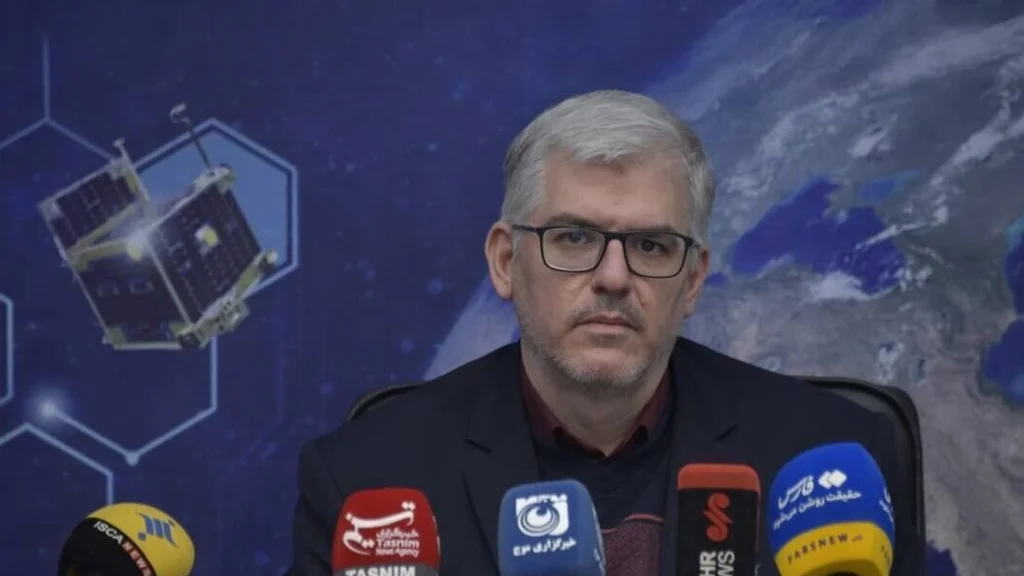
Hassan Salarieh, head of the Iranian Space Agency, said that Iran's space sector has remained operational despite damage to individual facilities during the conflict imposed by the US and the Israeli regime. He attributed this resilience to the country's distributed space infrastructure and domestic expertise.
Salarieh noted that companies, universities, and knowledge-based firms across Iran are involved in developing satellites, subsystems, and related technologies, which reduces reliance on government facilities. According to him, both communications and remote-sensing satellites remained operational during the conflict, and damaged ground infrastructure could be rapidly replaced to maintain services.
The official highlighted several milestones achieved during the current administration, including progress on the first phase of the Chabahar spaceport, the completion of satellite ground stations and control centers, and successful launches involving the Qaem 100 and Simorgh launch vehicles. He also pointed to the growing role of the private sector.
The Kowsar satellite became the first privately built Iranian satellite to reach orbit in November 2024, while the Kowsar 1.5 followed in December 2025. Other significant space projects cited by Salarieh included the Nahid-2 communications satellite, the Paya imaging satellite, and the 24-satellite Shahid Soleimani constellation. Iran is also developing the Pars-2 satellite, with an imaging resolution of about 2.5 meters, alongside additional Pars, Nahid, Saman, and Rad satellite projects.
Salarieh said the government was increasingly focused on turning space capabilities into practical services. Satellite data are being used for agriculture, water-resource management, environmental monitoring, disaster assessment, and updating geographic information. Satellite communications also support critical facilities and provide connectivity to remote areas where terrestrial infrastructure is difficult to establish.
According to Mehr News Agency, these statements were made by Hassan Salarieh, head of the Iranian Space Agency, in a recent interview.
Source: Mehr News — Read original story