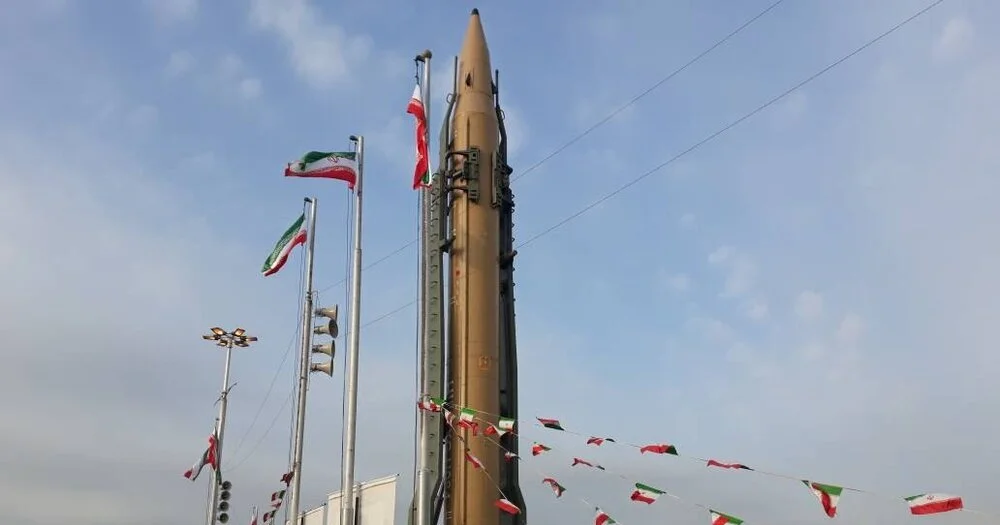
Iran's missile deterrence draws European security concerns, Mehr News reports
Mehr News says European capitals are now weighing the range of Iran's solid-fuel Sejjil missile, citing an Economist report, after the IRGC announced the removal of the 2,000-km cap on Iran's missiles.
Published on 21 November 2026
SaveIran's missile deterrence draws European security concerns, Mehr News reports
Mehr News has published an analysis arguing that Western security concerns about Iran's missile program have expanded beyond West Asia to include Europe, following the war waged by the United States and Israel against Iran. The article states that the campaign was intended to shift the regional balance of power in favor of Washington and Israel while weakening Tehran's defensive and deterrent capabilities, but that post-war developments indicate the aggressors' initial calculations did not match conditions on the ground.
The analysis points to a report by The Economist on European concerns over the extended range of Iran's ballistic missiles, specifically the strategic Sejjil missile. It says suggestions that newer versions of the missile could potentially reach parts of Europe have returned the question of Iran's deterrent capability, and its implications for NATO, to the foreground. According to the article, Western discussion of Iran's missiles was previously framed around Israel's security, US military bases and the military balance in the Persian Gulf and West Asia; it now also affects the security calculations of European capitals.
Describing the Sejjil as one of the most significant achievements of Iran's defense industry, the article says it uses solid-fuel technology and a two-stage design. It cites an assessment by the Center for Strategic and International Studies (CSIS) in the United States estimating the missile's range at approximately 2,000 kilometers. Solid fuel, the article notes, reduces preparation time and enhances the operational mobility of the missile system, attributes it describes as significant in the calculus of deterrence. It also refers to the Islamic Revolutionary Guard Corps' recent announcement on removing the self-imposed 2,000-kilometer range limit on Iran's missiles, saying the announcement does not confirm deployment of an operational missile with a specific range beyond 2,000 kilometers but signals a shift in the stated framework of Iran's missile policy.
The article asks why Iran's missile capability has remained a primary concern for the West even after large-scale military attacks, and answers that a nation's defensive strength is not measured solely by the number of enemy attacks or the damage inflicted on its infrastructure. It argues that the ability to maintain retaliatory capacity, sustain defense production and impose costs on an aggressor are also critical components of national power. It says that despite sanctions and extensive international restrictions, Iran has pursued indigenous missile technology over recent decades, making missile capabilities a cornerstone of its defense strategy, and that a military attack would not in itself destroy its technological and industrial capacities.
On Europe, the analysis describes what it calls a contradiction in European foreign policy: governments have aligned with Washington's pressure policies in many instances while expressing concern over the consequences of escalating military tensions and the expansion of Tehran's deterrent capacity. It argues that Europe's enduring security is inseparable from that of West Asia, and that aligning with policies that heighten the risk of war and instability carries security consequences for European nations. It adds that undermining Iran's security would not guarantee regional stability and could expand the scope of the crisis.
The article states that Iran's defensive power is not designed to initiate a war but to increase the cost of potential aggression and prevent its recurrence, and that no nation can be denied the right to develop conventional defensive capabilities. It concludes that Iran's security is a red line and that no foreign power can compel the country to accept insecurity by relying on military superiority. According to Mehr News, Europe's concern over the Sejjil reflects a broader reality: despite extensive pressures and threats, Iran remains committed to developing its defensive capabilities and maintaining its deterrent power, and any calculation that excludes Iran from the region's security equations without accounting for this would overlook a significant component of power in West Asia.
Source: Mehr News — Read original story