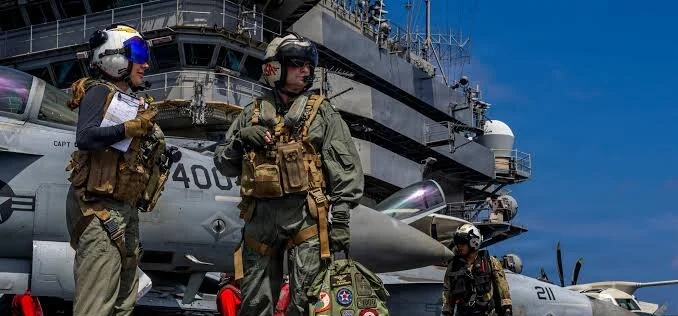
Analyst argues Iran conflict signals end of a century of great-power intervention in West Asia
A Mehr News analysis citing Harvard professor Stephen Walt argues the Iran conflict has accelerated the decline of foreign intervention in West Asia, with regional actors set to shape the area's future order.
Published on 20 November 2026
SaveAnalyst argues Iran conflict signals end of a century of great-power intervention in West Asia
An analysis published by Mehr News argues that the war waged by the United States and Israel against Iran cannot be assessed solely as a military confrontation or a dispute over Iran's nuclear program. Rather, it has become a test of the limits of American power in West Asia, an outcome that could alter the region's security equations and the standing of extra-regional powers for years to come.
The analysis cites Stephen Walt, a professor of international relations at Harvard University and a prominent realist theorist, who wrote in Foreign Policy in an article titled "The Middle East Is Finally Standing on Its Own Two Feet" that "the Iran conflict is bringing an end to a century of great-power intervention in the region." Walt argues that for the first time since 1919, the region's fate will be determined more than in the past by local actors, and he views a potential U.S.-Israeli war against Iran as a turning point that has accelerated the decline of foreign-power interventionism.
The article traces the history of outside intervention: after World War I and the collapse of the Ottoman Empire, Britain and France shaped the regional order by carving out spheres of influence and establishing new political structures. After World War II, the United States gradually replaced these European powers, seeking to maintain control over the region's security architecture through coups, support for allied governments, arms sales, military bases and direct intervention. The 1953 coup against the government of Mohammad Mossadegh, the 1991 Gulf War and the 2003 invasion of Iraq are cited as key milestones.
According to the analysis, the past two decades have shown that military superiority does not necessarily translate into the ability to dictate political outcomes. In Iraq and Libya, the United States failed to establish a stable order aligned with its initial objectives; Russia could not prevent the collapse of Bashar al-Assad's government; Saudi Arabia, despite advanced equipment and extensive arms support, failed to eliminate Ansar Allah from Yemen's political and military landscape; and Israel, notwithstanding large-scale operations, has been unable to completely eradicate Hamas and Hezbollah. In Walt's view, these developments indicate the diminishing efficacy of external military power, a reality the Iran conflict has brought into sharper focus.
The article notes that Washington has employed sweeping economic sanctions, diplomatic pressure, military threats and direct operations aimed at altering Iran's behavior or weakening its power structure, yet Iran has preserved its political structure while developing substantial missile and drone capabilities, raising the cost of military intervention. It adds that missile and drone technology has enabled actors with more limited resources to damage military bases and infrastructure, and that even air superiority does not guarantee victory. Walt is cited as arguing that a ground occupation of Iran, given its vast territory, large population and the United States' experiences in Iraq and Afghanistan, is strategically prohibitive and unrealistic.
The analysis also points to the declining relative importance of West Asian energy in great-power calculations, citing rising U.S. shale oil production and a gradual global shift toward reduced fossil fuel consumption. It says this, alongside the rising costs of military intervention, weakens incentives for a direct foreign presence, though the region's oil and gas remain significant. The outcome, it suggests, could be a different order in West Asia in which the balance of power among regional states gains greater significance, with governments relying more on domestic capabilities and regional arrangements. Walt even raises the possibility of fluid coalitions involving Iran, Saudi Arabia and other states formed out of the necessity to maintain a balance of power, and identifies the pursuit of independent deterrence, including nuclear deterrence, by some states as a potential consequence.
The article stresses that the end of the era of interventionism does not mean the complete removal of foreign powers: the United States, China and Russia will continue to maintain a presence through economic relations, arms sales, investment and diplomacy, but their status is shifting from actors able to directly shape regional dynamics to powers that must factor in the will and interests of local actors. It concludes that the conflict has exposed the gap between U.S. military might and its capacity to impose political will, and that should the trend become entrenched, Iran could emerge as a key player in the future order of West Asia. According to Mehr News, what is unfolding is not necessarily a complete U.S. withdrawal but the gradual end of an era in which Washington assumed it could dictate the fate of regional nations.
Source: Mehr News — Read original story