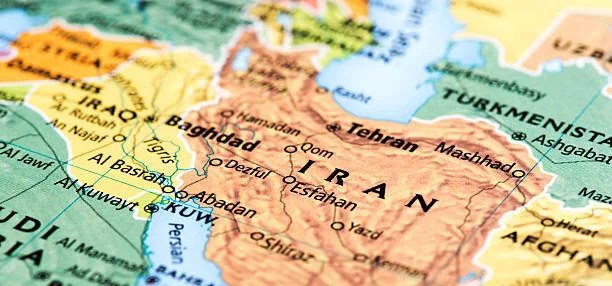
Iran's Strategic Gains from Post-9/11 US Wars
An analysis by Professor Tanveer Haider Naqvi argues that the US invasions of Afghanistan and Iraq inadvertently strengthened Iran by removing its regional adversaries, the Taliban and Saddam Hussein.
Published on 8 September 2026
SaveIran's Strategic Gains from Post-9/11 US Wars
In a detailed analysis, Professor Tanveer Haider Naqvi examines the strategic consequences of the post-9/11 US wars in Afghanistan and Iraq, arguing that Iran emerged as the greatest beneficiary. The article, published by Mehr News, reflects on the historical irony that the United States, an adversary of Iran, eliminated two of Iran's most significant enemies: the Taliban in Afghanistan and Saddam Hussein's regime in Iraq.
The analysis begins with a reference to the Qur'anic verse (6:129) about wrongdoers becoming allies of one another, framing the events as a form of divine providence. It recounts Iran's post-1979 revolutionary era, its isolation from the West, and the eight-year Iran-Iraq war (1980-1988) imposed by Saddam Hussein. Additionally, it highlights the hostile relations between Iran and the Taliban, culminating in the 1998 massacre of Iranian diplomats at the consulate in Mazar-i-Sharif, which brought the two countries to the brink of war.
Following the 9/11 attacks, the United States invaded Afghanistan, toppling the Taliban, and in 2003 invaded Iraq, overthrowing Saddam Hussein. Professor Naqvi argues that these wars, though not initiated by Iran, created a strategic vacuum that Iran filled. He cites several American officials and experts who acknowledged Iran's gains. Brent Scowcroft, former National Security Adviser, stated that Iran was a beneficiary of US activities in the Middle East because the US removed one of Iran's principal adversaries. President Barack Obama, in a 2015 speech, called Iran the single greatest beneficiary of the Iraq War, noting that its strategic position was strengthened by the removal of Saddam Hussein.
Other figures quoted include Richard Haass, who called Iran "the great strategic beneficiary of the Iraq War"; Peter Galbraith, who wrote that Iran was the major beneficiary of American-induced changes in Iraq; and Thomas Ricks, who bluntly said "Iran has been the big winner in this war." The article also mentions that General David Petraeus mentioned Iran 105 times in a 2008 congressional briefing, reflecting Iran's growing influence in Iraq. CNN's Michael Ware described the removal of the Taliban and Saddam Hussein as a "gift" to Tehran.
The analysis extends to Afghanistan, where the US Institute of Peace's Iran Primer described the Taliban's removal as "an unintended strategic gift from Washington." Professor Naqvi emphasizes that Iran's own statecraft, the Islamic Revolutionary Guard Corps, and alliances with Hezbollah and Syria were fundamental to its power, but the US wars provided an environment for expansion. The article concludes that Iran, once isolated and war-ravaged, now stands as a resilient power confronting the United States and Israel, a position few could have imagined in 1979. It poses the question of who truly gained from the post-9/11 wars and suggests that history's irony has favored Iran.
According to Mehr News, this analysis by Professor Tanveer Haider Naqvi offers a perspective on the unintended consequences of US military interventions in the region.
Source: Mehr News — Read original story