Iran says investment security is key to global gas market stability
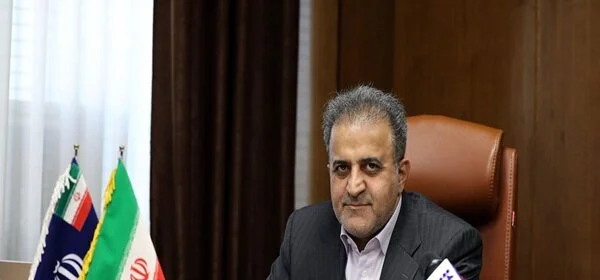
Deputy Oil Minister Ali-Mohammad Mousavi said Iran will press for investment security and against politicisation of energy trade at the eighth GECF summit in Moscow, where President Masoud Pezeshkian will lead the delegation.
Published on 24 October 2026
SaveIran says investment security is key to global gas market stability
Iran's deputy oil minister for international affairs and trade, Ali-Mohammad Mousavi, said the eighth summit of the Gas Exporting Countries Forum (GECF) is being held at a critical point in the evolution of the international energy system and coincides with the forum's 25th anniversary. In an interview with the Iranian oil ministry's news service SHANA, Mousavi said changes in international gas trade patterns, the expansion of liquefied natural gas infrastructure, growing concerns over supply and demand security, intensifying competition for investment and rising energy needs in emerging economies have underscored the importance of dialogue among gas-producing and exporting countries. He said the summit allows leaders to exchange views at the highest political level, assess long-term market trends and strengthen common approaches to strategic issues.
Mousavi said Iran was the principal proponent of establishing the GECF and is one of its founding members, and has consistently played an active role in the forum. President Masoud Pezeshkian will lead a high-level delegation to the Moscow summit, accompanied by Hamid Bovard, caretaker oil minister. The president's address, setting out Iran's positions on international developments, the global energy market and the future of gas cooperation, will be among the main events of the visit. Before the leaders' summit, the forum's 28th ministerial meeting will bring together ministers and senior representatives of member countries to review and approve the secretariat's programmes and finalise documents for the summit. The Iranian delegation also plans bilateral meetings with officials from member and observer countries on gas trade, investment, infrastructure development, technology transfer and technical cooperation.
On Iran's priorities, Mousavi said they fall along two dimensions: political issues and strategic energy priorities. On the political front, he said the delegation will explain what he described as military aggression by the United States and Israel against Iran and condemn actions targeting the country's national sovereignty, territorial integrity and security. He said the martyrdom of the Leader of the Islamic Revolution, military commanders and civilians, as well as events related to Minab and Lamerd, will be addressed in line with Iran's official positions. In energy, he listed protecting members' collective interests, strengthening the role of natural gas in energy security, ensuring continued investment across the gas value chain, countering unilateral restrictive measures against producers and expanding technical, commercial and investment cooperation.
Mousavi said the gas industry is capital-intensive, involves long investment recovery periods and depends on extensive infrastructure, and therefore requires political stability, investment security and predictable market conditions more than many other sectors. He said geopolitical escalation, threats to energy infrastructure, disruption of transport routes or unilateral restrictions can raise project financing costs and investment risks and affect energy prices, undermining supply security. He called for preventing the politicisation of energy trade and said the market should develop on the basis of cooperation, mutual benefit, respect for contractual obligations and non-discriminatory access to technology, equipment and financial resources.
He said natural gas will remain an important pillar of global energy supply in the coming decades, citing lower carbon dioxide emissions than coal when methane emissions are managed, flexibility that supports intermittent renewables, and rising demand in developing countries. He said energy transition pathways differ by country and should be realistic and equitable without unreasonable restrictions on gas investment. Mousavi said the GECF is an intergovernmental body with a consultative, analytical and cooperative mandate and, unlike OPEC, has no mechanism for setting production quotas. He said Iran's reserves, geographic position, transmission network and technical experience give it potential to expand cooperation on pipeline and LNG exports, swaps and transit, field development and reservoir management. According to Mehr News, citing SHANA, he said realising this potential will require political will among member states and favourable economic, contractual and investment conditions.
Source: Mehr News — Read original story