From Nationalizing Iran Oil to CIA-Backed Coup of 1953
The 1953 Iranian coup, orchestrated by the US and UK, overthrew Prime Minister Mohammad Mosaddegh after his oil nationalization policy. The coup led to decades of distrust and shaped Iran's relations with the West.
Published on 19 August 2026
SaveFrom Nationalizing Iran Oil to CIA-Backed Coup of 1953
The decades-old hostilities between the Islamic Republic of Iran and the West can be traced to several conspiracies that created constant distrust against colonial powers such as the United States and the United Kingdom. Sixty-eight years ago around this time, American and British intelligence services organized a coup in Iran that arguably changed the equations in West Asia forever.
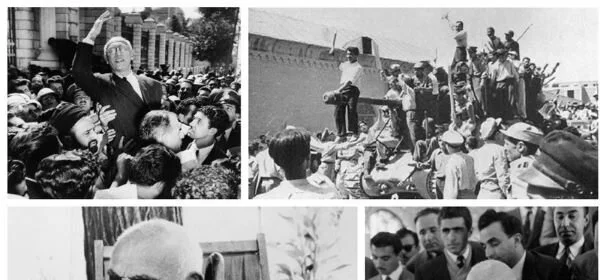
The 1953 Iranian coup d'état, known in Iran as the 28 Mordad coup d'état, was the overthrow of the democratically elected Prime Minister Mohammad Mosaddegh in favor of strengthening the monarchical rule of the Shah, Mohammad Reza Pahlavi, on 19 August 1953. The United States overthrew the national government and imposed a dictatorship, allowing the dictator to torture and kill people. As a result, the Americans were able to make hundreds of billions of dollars and plunder Iran's wealth.
Prime Minister Mohammad Mosaddegh was a popular Iranian politician who served as the 35th Prime Minister of Iran, holding office from 1951 until 1953. His administration introduced social security, land reforms, and higher taxes, including taxation of rent on land. His government's most significant policy was the nationalization of the Iranian oil industry, which attacked British oil companies operating in Iran. This brought him into conflict with pro-Western elites and the Shah.
In late 1951, Iran's Parliament approved the oil nationalization agreement in a near-unanimous vote. The nationalization, supported by Ayatollah Kashani, made Mosaddegh instantly popular among millions of Iranians, cementing him as a national hero. Many Iranians felt they were taking control of their own country's affairs for the first time in centuries. Britain, facing the newly elected government, vigorously opposed Mosaddegh's demands for more favorable concessionary arrangements.
History shows that colonial powers have always tried to control other countries' resources. London could not tolerate Mosaddegh's nationalization and set the stage for a coup with American cooperation. Working with the Shah, the CIA and British intelligence engineered a plot against Mosaddegh, devising deadly plots in the form of riots in Tehran that led to his arrest. In August 2013, the US government formally acknowledged its role in the coup by releasing classified documents showing it was in charge of both planning and execution, including bribing Iranian politicians, security, and army officials, as well as pro-coup propaganda. The CIA is quoted acknowledging the coup was carried out "under CIA direction" and "as an act of US foreign policy, conceived and approved at the highest levels of government."
On 19 August 1953, the military, backed by street protests organized and financed by the CIA and British intelligence, overthrew Mosaddegh to appoint their own puppet to control the oil-rich country. Hundreds of Iranian people were killed. Mosaddegh was arrested, tried, and convicted of treason by the Shah's military court. On 21 December 1953, he was sentenced to three years in jail and then placed under house arrest for the rest of his life. As a thank you, Mohammad Reza Shah signed over 40 percent of Iran's oil fields to US companies. After the coup, the Shah continued his rule for the next 26 years until he was overthrown by the Islamic Revolution.
Following the coup, a government under General Fazlollah Zahedi was formed, allowing Mohammad Reza Pahlavi to rule more firmly as monarch. He relied heavily on US support and became one of America's most trusted Cold War allies. US economic and military aid poured into Iran during the 1950s, 1960s, and 1970s. Between January 1978 and 11 February 1979, the Muslim revolutionary people of Iran, under the leadership of Ayatollah Khomeini, voiced their opposition against the secular and US-backed rule of the Shah. In early 1979, the Shah and his family fled Iran on 16 January forever. According to Mehr News Agency, these events are considered prominent incidents in contemporary Iranian history.
Source: Mehr News — Read original story