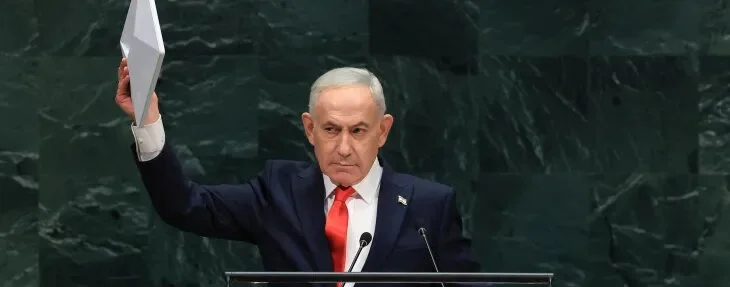
Netanyahu's UNGA address met with walkouts by dozens of delegations
Israeli PM Netanyahu addressed the UN General Assembly amid a walkout by 77 delegations, according to Israeli media. The speech focused on rebutting critics and came 33 days before Israeli elections.
Published on 26 September 2026
SaveNetanyahu's UNGA address met with walkouts by dozens of delegations
Israeli Prime Minister Benjamin Netanyahu addressed the United Nations General Assembly in New York, but his speech was marked by a significant walkout by numerous delegations. According to figures published in Israeli media, 77 delegations were absent from the hall during his address; some left before he began speaking, while others did not attend at all. Agence France-Presse (AFP) also confirmed the walkout by dozens of delegations, reporting it as a protest against Israel's policies and the war in Gaza.
Netanyahu sought to portray Israel as a powerful nation enjoying covert international support, but the scene in the hall showed empty seats and delegations departing. In response to the walkout, Netanyahu remarked that if there were any other "moral cowards" who had not yet left, they could do so right then. Israeli media, including Yedioth Ahronoth, described the incident as a rare and dramatic act of protest. The walkout underscored the gap between Israel's official narrative and global perceptions, especially regarding the war in Gaza, the high Palestinian death toll, and international legal proceedings. An independent UN commission of inquiry concluded in 2025 that Israel had committed genocide in Gaza, a finding Israel rejects. In November 2024, the International Criminal Court issued arrest warrants for Netanyahu and Yoav Gallant on charges of war crimes and crimes against humanity. Netanyahu rejected the genocide accusation at the UN, calling it the "greatest lie of the century."
During his roughly 40-minute address, Netanyahu listed a long series of adversaries and critics, including Iran, Qatar, Turkey, European nations, and New York Mayor Zahran Mamdani. A significant portion of his remarks was dedicated to rebutting critics rather than outlining a vision for ending the war or the region's future. This focus on responding to critics raised questions about Israel's diplomatic standing. The speech also came just 33 days before Israeli parliamentary elections scheduled for October 27. Israeli outlets such as Haaretz and Yedioth Ahronoth suggested that much of the speech was aimed at a domestic audience rather than at critical governments. Netanyahu's trip to New York was brief, and unlike previous visits, a meeting with Donald Trump was not on the official agenda. The Associated Press analyzed his speech against the backdrop of the impending election and mounting international criticism.
A contradiction was evident: Netanyahu claimed that many leaders who walked out privately expressed gratitude for Israel's actions, but this assertion was not independently verified. The walkouts, protests in New York, and international legal pressure form a pattern of indicators regarding the diplomatic cost of Israel's policies. According to Mehr News, the most telling image of Netanyahu's speech was the empty seats, raising the question of why Israel struggles to have its narrative heard if it is confident in it.
Source: Mehr News — Read original story