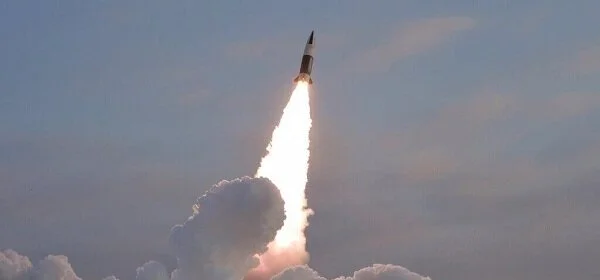
Iran's 2,000 km missile range limit is a policy choice, not a technical ceiling, officials say
Iranian commanders have long described the 2,000 km missile range as a defense-policy decision rather than a technical limit. In November 2026 an IRGC spokesman said the restriction had been lifted, though no new range or operational system was announced.
Published on 17 November 2026
SaveIran's 2,000 km missile range limit is a policy choice, not a technical ceiling, officials say
For years, the 2,000-kilometer range limit on Iran's ballistic missiles has been presented by Iranian military officials as a strategic and doctrinal choice rather than a technical or engineering constraint. In November 2017, Brigadier General Aziz Jafari, then commander of the IRGC, said Iran's missiles had a range of 2,000 kilometers and that this was considered sufficient for defense needs, since most U.S. military forces and interests in the region lay within that distance. A year later, in December 2018, Brigadier General Amir Ali Hajizadeh, then commander of the IRGC Aerospace Force, said at Iran University of Science and Technology that the 2,000-kilometer range was not a matter of divine revelation and that Iran had the capability to build longer-range missiles. He said Iran faced no technical or contractual restrictions on increasing range, and that the existing limit had been set according to defense needs.
The article traces the program's origins to Martyr Hassan Tehrani Moghaddam, who in 1983 was tasked with establishing and organizing the IRGC's surface-to-surface missile command. In February 1985, Iran launched its first missile toward Kirkuk, beginning a shift from assembling and operating foreign systems to designing and producing indigenous ones. According to an account cited by Hajizadeh, Tehrani Moghaddam initially set a target of a 2,000-kilometer range and, once achieved, planned to revisit systems within that range to address quantitative and qualitative shortcomings. The article says the program continued after his martyrdom, indicating it had grown into a broader scientific, industrial and organizational capability.
Among publicly announced systems, the Sejjil is described as a two-stage solid-fuel ballistic missile with a declared range of about 2,000 kilometers. The Khorramshahr-4, also known as Kheibar, was unveiled in June 2023 with a declared range of 2,000 kilometers and a warhead of about 1,500 kilograms, according to Ministry of Defense specifications. The Emad has a reported range of about 1,600 to 1,700 kilometers, and the Fattah about 1,400 kilometers. The article notes that exceeding 2,000 kilometers would not necessarily mean abandoning these missile families, but could involve newer generations built on accumulated knowledge.
The most significant development cited came on November 7, 2026, when IRGC spokesman Brigadier General Hossein Mohebbi, responding to a question about lifting the missile-range restriction, said: "This limitation has been lifted for us." The statement followed remarks by the Leader of the Islamic Revolution, Ayatollah Seyyed Mojtaba Khamenei, during a meeting with senior military commanders on the need for an immediate and effective response to any threat without geographical limitations. The article stresses that the spokesman did not announce a new range or provide specifications for an operational missile, so what is established is a change in the officially declared position, not confirmation that a missile with a specific range beyond 2,000 kilometers has been deployed.
On feasibility, the article says extending range depends on propulsion technology, advanced materials, guidance and navigation, thermal management and warhead design, fields in which Iran has invested for decades, including through solid- and liquid-fuel missiles and indigenous satellite launch vehicles. It cites a U.S. Congressional Research Service report published on June 17, 2025, which, citing a U.S. Defense Intelligence Agency assessment, said Iran could use its satellite launch vehicle technology to develop a militarily capable intercontinental ballistic missile by 2035 if it decided to do so. The article adds that greater range alone does not guarantee effective deterrence, since target identification, intelligence, operational readiness, accuracy and system reliability also matter. According to Mehr News, the discussion reflects changing threat assessments rather than confirmation of a deployed longer-range system.
Source: Mehr News — Read original story