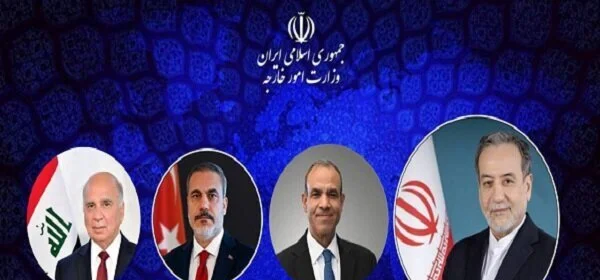
Iran FM Araghchi discusses US peace deal with Turkish, Iraqi, Egyptian counterparts
Iranian Foreign Minister Seyed Abbas Araghchi held phone calls with his Turkish, Iraqi, and Egyptian counterparts to discuss the Iran-US peace deal mediated by Pakistan.
Published on 15 June 2026
SaveIran FM Araghchi discusses US peace deal with Turkish, Iraqi, Egyptian counterparts
Iranian Foreign Minister Seyed Abbas Araghchi held separate phone conversations with the foreign ministers of Turkey, Iraq, and Egypt—Hakan Fidan, Fuad Hussein, and Badr Abdelatty, respectively—to discuss the process and provisions of a memorandum of understanding (MoU) reached between Iran and the United States with Pakistani mediation.
During the calls, Araghchi highlighted the United States' responsibility for implementing the agreement, emphasizing the need to completely stop the Zionist regime's aggression and destabilizing attacks against Lebanon. He also expressed appreciation for the positions and roles of Turkey, Iraq, and Egypt in supporting the establishment of a ceasefire, reducing tensions, and diplomatic efforts to achieve stability and security in the region.
The foreign ministers of Iran, Turkey, Iraq, and Egypt emphasized the continuation of close consultations and cooperation on regional developments and the need to strengthen diplomatic efforts to maintain peace and stability in the region.
The calls came after Pakistani Prime Minister Shehbaz Sharif announced that a peace deal had been reached between Iran and the US following weeks of negotiations mediated by Pakistan with support from Qatar, Saudi Arabia, and Turkey. According to Sharif, the agreement provides for the immediate and permanent end of military operations on all fronts, including Lebanon, and is scheduled to be formally signed in Switzerland on June 19.
According to Mehr News, the Iranian foreign minister's consultations with his regional counterparts underscore the diplomatic efforts surrounding the Iran-US peace deal and the broader goal of regional stability.
Source: Mehr News — Read original story