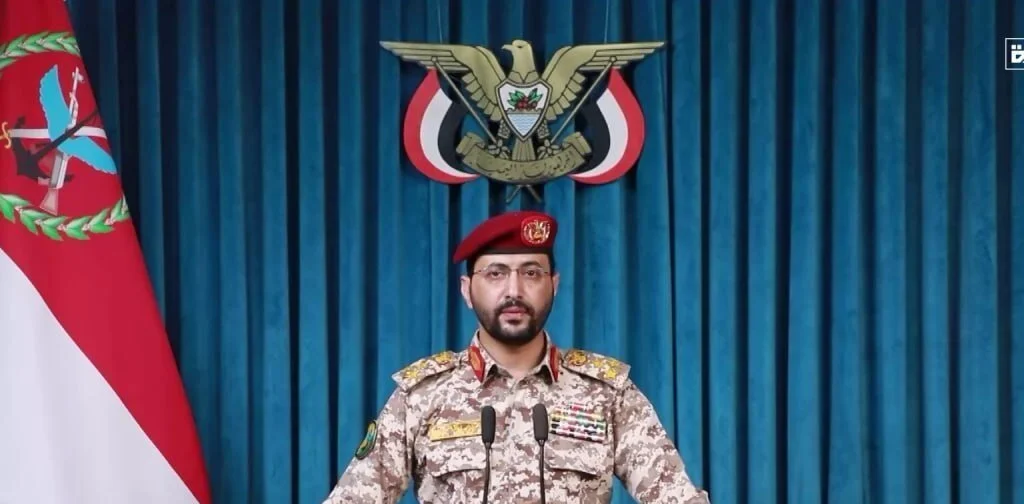
Yemen's Armed Forces Say They Struck Riyadh Airport with Ballistic Missile
Yemen's armed forces spokesman Yahya Saree said a ballistic missile hit King Khalid airport in Riyadh and a Saudi aircraft was downed over Taiz. He warned international airlines against flying in Saudi airspace.
Published on 8 October 2026
SaveYemen's Armed Forces Say They Struck Riyadh Airport with Ballistic Missile
Yemen's armed forces announced on Wednesday that they targeted King Khalid International Airport in Riyadh with a ballistic missile, according to a press statement issued by Brigadier General Yahya Saree, the group's spokesman. Saree said the missile struck its intended target and caused disruption to activity at the airport. He described the launch as part of continuing retaliatory responses by Yemen's armed forces to attacks on Yemeni territory.
In the same statement, Saree said a Saudi aircraft was brought down with an appropriate weapon while it was carrying out what he described as hostile actions in the skies over Taiz province. No further details were provided on the type of aircraft or the weapon used.
Saree also issued a warning to international airline companies, saying, "For the last time, we warn all international airline companies about the consequences of continuing their flights in Saudi Arabia's airspace." The statement added that Saudi airspace, with the exception of the skies over the holy areas of Mecca and Medina, has become a scene of military operations.
The announcement is the latest in a series of claims by Yemen's armed forces regarding missile and drone launches toward Saudi territory. There was no immediate public response from Saudi authorities to the specific claims made in the statement, and the reported disruption at Riyadh's airport could not be independently verified.
According to Mehr News, the statement was released by Brigadier General Yahya Saree, the spokesman for Yemen's armed forces, who has regularly issued similar announcements regarding operations against Saudi targets.
Source: Mehr News — Read original story